Galveston's Unique Vegetation Debris Profile
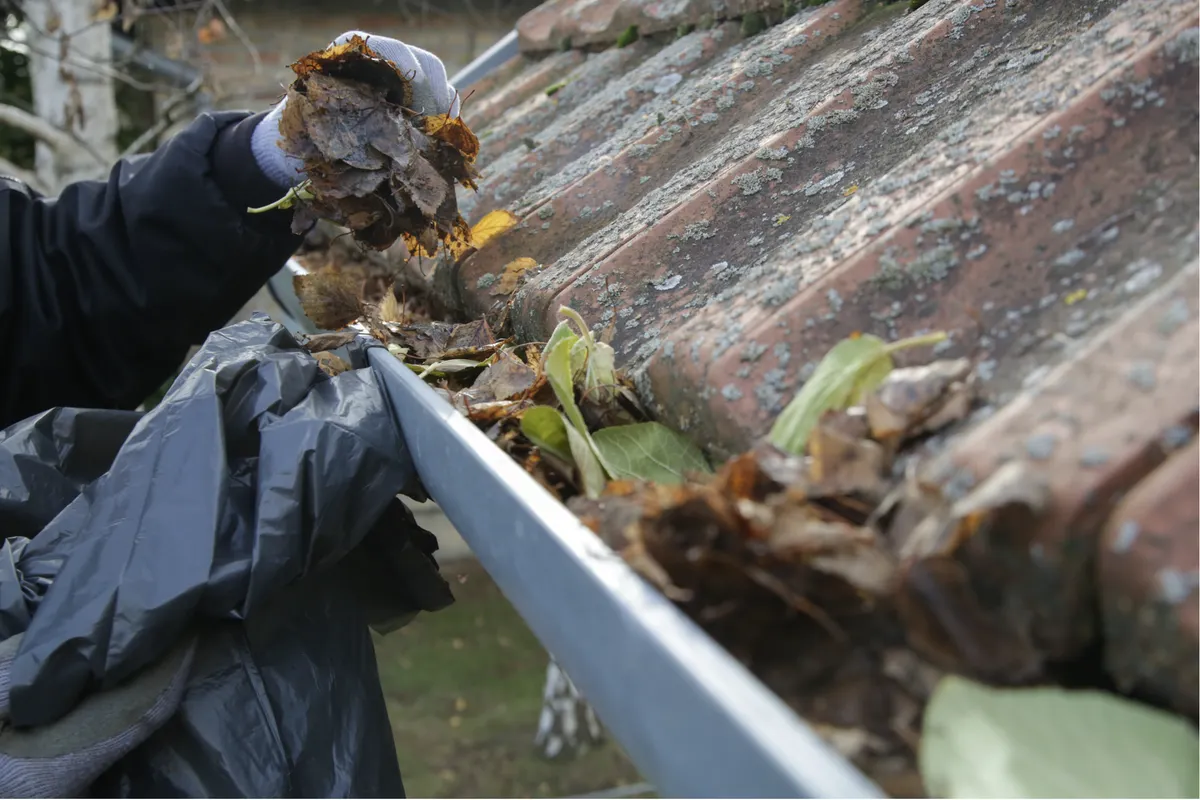
Every property on the island contends with a debris cocktail found almost nowhere else in the state. Live oak catkins blanket rooflines from late February through April, producing dense, fibrous mats that trap moisture and block water flow within days of accumulation. The catkins are small enough to slip past most gutter guard systems and heavy enough to compact into solid plugs at downspout entries.
Oleander, one of Galveston's most ubiquitous ornamental shrubs, drops leathery leaves and seed pods year-round. Unlike deciduous debris, oleander material does not break down quickly—it accumulates in layers that resist water flow even when partially saturated. Palm fronds from Washingtonia and Sabal palms shed fibrous strands that weave through gutter seams and wrap around hanger brackets.
Chinese tallow trees, classified as invasive by the Texas Department of Agriculture, produce a heavy fall leaf drop that coincides with early-season cold fronts. The broad, waxy leaves mat together and form waterproof layers in gutter troughs. The Galveston Island Tree Conservancy has documented the tallow's spread across the island's west end, where its leaf litter now accounts for a significant share of seasonal gutter clogging in residential neighborhoods.
Salt Removal, Mold Prevention, and Foundation Protection
Coastal gutter cleaning on Galveston Island requires steps that inland cleaning services never consider. Salt buildup is the most persistent issue. Gulf-driven onshore winds deposit a fine layer of salt crystals on every exterior surface, and gutters collect that salt in concentrated doses. Because salt is hygroscopic—it draws moisture from the surrounding air—it holds water against metal surfaces around the clock, accelerating oxidation on aluminum and causing pitting corrosion on steel fasteners and brackets.
A professional salt rinse treatment after debris removal neutralizes these deposits and adds meaningful years to gutter system lifespan. Skipping the rinse means salt damage accumulates with every weather cycle, compounding the corrosion that eventually leads to leaks and replacement.
Galveston's average relative humidity ranges from 75% to 81% year-round, according to the National Weather Service Houston/Galveston office. That humidity, combined with standing organic debris, creates ideal conditions for mold and mildew colonization inside gutter channels. Left unchecked, mold growth spreads to fascia boards, soffits, and eventually interior wall cavities during heavy rain events.
Foundation protection matters more on Galveston Island than in most Texas cities. The island's sandy, low-clay soils drain unevenly under concentrated water flow. When clogged gutters force water over the edge rather than through downspouts, the resulting pooling against the foundation causes differential settling—uneven soil movement that produces cracks, sloping floors, and structural shifting that costs thousands to remediate.
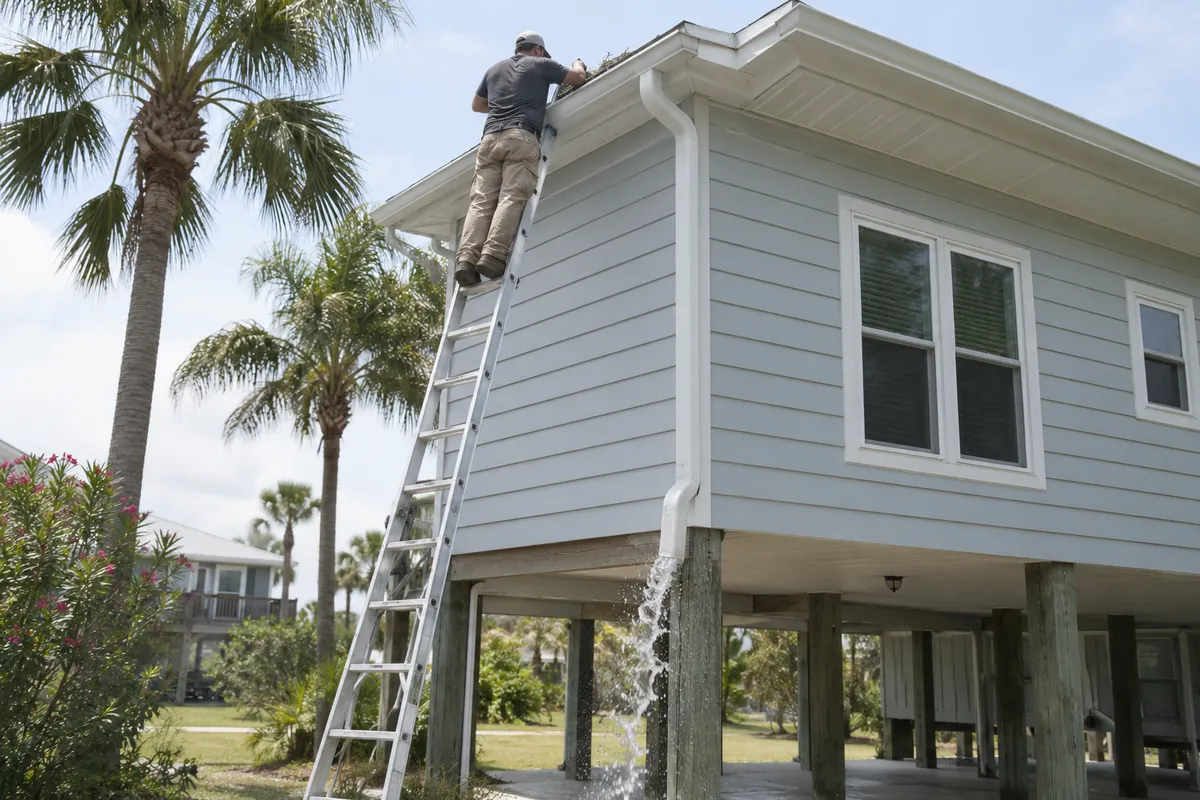
The combination of salt spray, subtropical vegetation, and tropical weather events means Galveston gutters fill faster and corrode quicker than inland systems. Three cleanings per year is the baseline—properties under heavy tree canopy or near the beachfront may need four.
Gutter Cleaning Pricing
Transparent pricing for every gutter cleaning service available to Galveston Island homeowners. All estimates are free and carry no obligation.
| Service | Price Range | Details |
|---|---|---|
| Gutter Cleaning | $157–$203/visit | Full debris removal, inspection, and flow test for average single-story home |
| Downspout Flushing | $75–$125 | High-pressure flush of all downspouts to clear blockages and verify drainage |
| Salt Rinse Treatment | $50–$100 | Freshwater rinse to neutralize salt deposits and slow coastal corrosion |
| Seasonal Cleaning Package | $400–$525/year | Three scheduled cleanings per year with priority booking and package savings |
| Emergency Post-Storm Cleanout | Call for estimate | Rapid response debris removal and damage assessment after tropical weather events |
Pricing reflects typical single-story Galveston homes. Multi-story properties, complex rooflines, and heavy debris loads may affect final cost. All estimates are provided on-site at no charge.
Schedule a Cleaning Before the Next Storm
Clear gutters are the first line of defense when tropical weather hits. Call for a free on-site estimate.
(409) 741-9557Seasonal Cleaning Calendar
The best gutter cleaning schedule for Galveston homeowners, timed to the island's vegetation cycles and weather patterns.
Clear live oak catkins and spring pollen accumulation. Catkins drop heavily in this window and form dense mats that block water flow. Best scheduled after the last major catkin wave, typically mid-to-late April.
Pre-hurricane season cleaning. Gutters must be fully clear before the first tropical system threatens. This visit also catches any oleander and palm debris that accumulated since spring cleaning.
Post leaf-drop cleaning. Chinese tallow, live oak, and oleander shed their heaviest loads in late fall. Clearing this debris before winter rains prevents standing water and mold colonization through the wet season.
Post-storm assessment and cleanup. Galveston's winter cold fronts push debris and salt deposits into gutter systems. This optional fourth visit is especially valuable for beachfront properties exposed to direct Gulf winds.
The 8-Step Coastal Cleaning Process
Every gutter cleaning follows a consistent, thorough process designed specifically for the demands of coastal properties.
Roof & Gutter Inspection
Visual survey of roof edge, fascia condition, and gutter alignment before work begins.
Debris Removal
Hand-clearing of all leaves, catkins, palm fiber, sand, and organic matter from every trough section.
Downspout Flushing
High-pressure water flush through every downspout to clear blockages and verify unobstructed drainage.
Salt Deposit Rinse
Freshwater rinse targeting salt crystal accumulation on interior gutter surfaces and fastener points.
Seam & Joint Check
Inspection of all gutter seams, miters, and end caps for separation, sealant failure, or corrosion damage.
Hanger Tightness Test
Manual check of every hanger bracket and screw point to confirm secure attachment to fascia board.
Water Flow Test
Full-volume water run through the entire system to verify proper slope, drainage speed, and splash-free operation.
Condition Report
Written summary of system condition, any damage found, and recommended follow-up services or repairs.
Signs a Gutter Cleaning Is Overdue
Knowing the difference between urgent and routine signs helps homeowners prioritize service timing and avoid costly water damage.
Urgent Signs
- Water pouring over gutter edges during moderate rain
- Visible plant growth or seedlings sprouting from gutter troughs
- Staining or mold streaks running down exterior walls beneath gutters
- Pooling water against the foundation after rainfall
- Sagging or pulling-away sections visible from ground level
- Insects or mosquitoes congregating near gutter areas
Routine Maintenance Signs
- Debris visible along the gutter lip from the ground
- Slow dripping from downspout outlets after rain stops
- Minor granule buildup from roof shingles in gutter channels
- Three or more months since the last professional cleaning
- Recent wind event or tropical storm passed through the area
- Seasonal vegetation cycle has completed (catkins, leaf drop)
Protect the Investment Beneath the Roofline
Functioning gutters prevent fascia rot, foundation damage, and mold growth. Free estimates, no obligation.
(409) 741-9557Frequently Asked Questions
Common questions about gutter cleaning for Galveston Island homes and coastal properties.
Galveston homeowners should schedule gutter cleaning a minimum of three times per year. The island's combination of subtropical vegetation, salt air exposure, and frequent tropical weather events accelerates debris accumulation and corrosion far beyond what inland homes experience. Properties near the beachfront or under heavy live oak canopy may benefit from quarterly service. The three recommended windows are spring (post-catkin drop in April), early summer (pre-hurricane season in late May or June), and late fall (post leaf-drop in November or December).
Professional gutter cleaning in Galveston typically costs $157 to $203 per visit for an average single-story home. Add-on services like downspout flushing ($75–$125) and salt rinse treatment ($50–$100) are recommended for coastal properties. A seasonal cleaning package covering three visits per year runs $400 to $525, which represents meaningful savings over individually booked appointments. Multi-story homes, complex rooflines, and properties with heavy debris accumulation may see higher quotes.
Salt deposits accumulate on Galveston gutters from Gulf-driven wind spray, particularly during storm events and periods of onshore flow. These deposits are hygroscopic, meaning they attract and hold moisture against metal surfaces around the clock. Over time, persistent salt-moisture contact accelerates oxidation on aluminum gutters and causes pitting corrosion on steel components like brackets and screws. A freshwater salt rinse after each debris removal neutralizes these deposits and extends the functional lifespan of the entire gutter system by years.
Galveston gutters accumulate a distinctive mix of vegetation and coastal debris. Live oak catkins drop heavily in spring and create dense, water-blocking mats. Oleander leaves and seed pods fall year-round and resist decomposition. Palm fronds and fiber shed from Washingtonia and Sabal palms, wrapping around hanger brackets and weaving into seams. Chinese tallow leaves create thick, waxy clogs in late fall. Sand and shell fragments carried by Gulf winds add abrasive grit that wears down gutter finishes. After storms, roof granules, small branches, and wind-deposited material compound the problem significantly.
Clogged gutters pose an elevated foundation risk on Galveston Island due to the sandy, low-clay soil composition. When gutters overflow, water pools directly against the foundation rather than being directed away through downspouts and drainage extensions. Sandy island soils drain unevenly under concentrated water flow, and the resulting differential settling leads to cracks, uneven floors, and structural shifting. Foundation remediation on the island typically costs $5,000 to $15,000 or more. Regular gutter cleaning is one of the most cost-effective foundation protection measures available to Galveston homeowners.
Both cleanings are recommended. A pre-hurricane-season cleaning in late May or early June ensures gutters can handle the heavy rainfall that tropical systems deliver. Clogged gutters during a hurricane or tropical storm can cause catastrophic overflow and water intrusion through soffits, fascia, and even into wall cavities. A post-season cleaning in November or December clears storm-deposited debris—branches, sand, roofing material, and salt residue—and allows a full inspection for wind damage, shifted hangers, and compromised seams before the next weather cycle begins.
A professional gutter cleaning for an average Galveston home takes between 90 minutes and two hours. This includes the full eight-step process: debris removal, downspout flushing, salt rinse treatment, seam and joint inspection, hanger tightness check, and a final water flow test with condition report. Homes with heavy debris accumulation, multiple stories, or complex rooflines may require additional time. Emergency post-storm cleanouts can take longer depending on the severity of debris loading and any damage that needs assessment.
Related Gutter Services
Cleaning is one part of a complete gutter maintenance program. Explore additional services designed for Galveston's coastal environment.