Understanding Salt Air Corrosion Damage
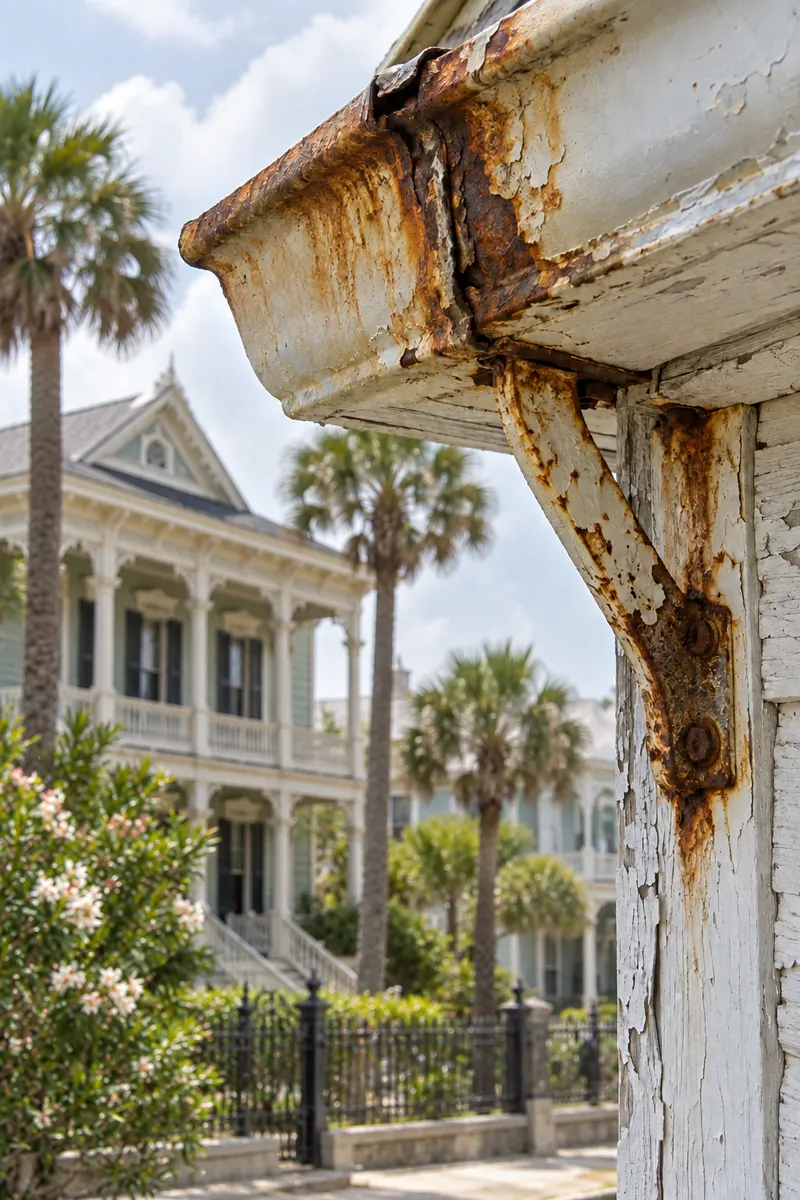
Salt air corrosion is the single most persistent threat to gutter systems on Galveston Island and throughout the coastal corridor. Airborne sodium chloride particles settle on metal surfaces and initiate an electrochemical reaction that degrades aluminum, steel, and even galvalume coatings over time. The damage often manifests in predictable ways: seam failures where caulking breaks down under repeated salt exposure, hanger and bracket rust that loosens the entire system from the fascia, and pitting corrosion that eventually perforates the gutter trough itself.
Properties within two miles of the shoreline face the most aggressive salt exposure. On the island's beachfront, gutter systems that would last 20 to 25 years in an inland Texas city may show significant corrosion damage within 10 to 12 years without regular maintenance. The combination of salt deposits and Galveston's high humidity creates a near-constant wet-salt film on metal surfaces, dramatically accelerating the oxidation cycle. Fascia boards trapped behind failing gutters absorb moisture that has nowhere to drain, leading to wood rot that often goes undetected until the gutter physically separates from the roofline.
Bracket loosening is particularly common in older installations that used galvanized steel hardware rather than stainless steel or aluminum fasteners. When dissimilar metals contact each other in a salt air environment, galvanic corrosion accelerates the degradation of the less noble metal. A qualified repair technician identifies not just the visible damage but the underlying material incompatibilities that caused it.
Post-Hurricane and Storm Damage
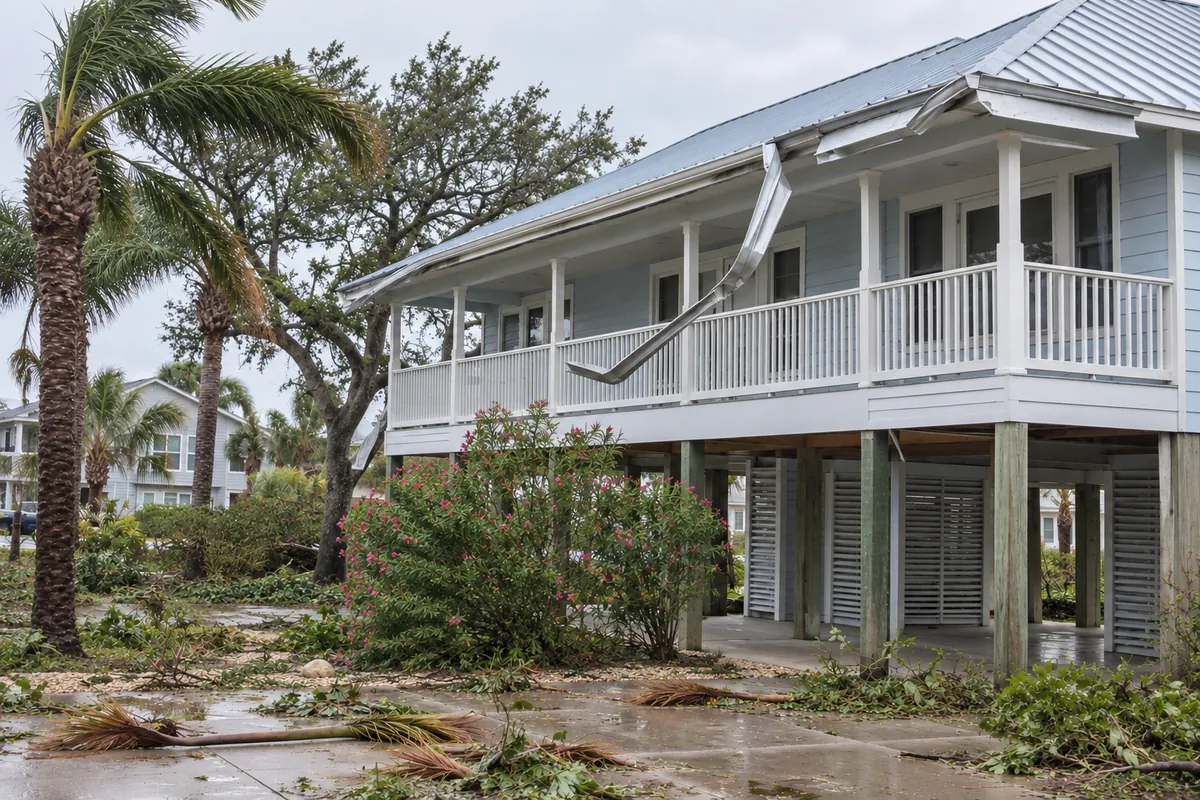
Galveston County sits squarely in the hurricane corridor, and every major storm event leaves a trail of gutter damage across the island and mainland communities. Hurricane Ike in 2008 demonstrated just how devastating wind-driven rain and storm surge can be to residential gutter systems, ripping entire runs from fascia boards, crushing downspouts with airborne debris, and filling gutter troughs with sand, seaweed, and building materials from neighboring properties. More recently, Hurricane Beryl in 2024 reminded Galveston County homeowners that even a Category 1 storm generates enough wind shear to tear loose any gutter system that is not mounted with hurricane-rated hardware.
Wind-torn gutter sections create immediate vulnerability. Exposed fascia absorbs rainwater rapidly, and in Galveston's subtropical climate, mold and rot can establish within days of a storm event. Emergency repairs focus first on protecting the exposed wood and redirecting water flow away from the foundation, followed by permanent section replacement once materials become available. After major storms, demand for gutter repair services surges across the county, and wait times for permanent restoration can extend to several weeks.
Storm surge debris presents its own category of gutter damage. Homes in flood-prone areas of the island, Bolivar Peninsula, and the bayfront communities often find gutter systems packed with mud, vegetation, and saltwater residue after tropical events. This debris load puts enormous weight stress on hangers and brackets while the saltwater residue accelerates corrosion of any exposed metal. Post-storm gutter assessment should include not just the visible damage but a thorough flush and inspection of all downspout runs for hidden blockages.
According to local contractor reports, roughly 40 percent of gutter repair calls in Galveston County trace back to a combination of salt corrosion and deferred maintenance. Addressing minor seam leaks and loose brackets early prevents the cascading fascia rot and foundation moisture problems that turn a $150 repair into a $2,000 replacement project. The National Weather Service Houston/Galveston office tracks the severe weather events that compound this wear on coastal structures.
Gutter Repair Cost Guide
Approximate pricing for common gutter repair services in Galveston County. Coastal properties may see a 10 to 15 percent premium for marine-grade sealants and corrosion-resistant hardware.
| Repair Service | Price Range | Notes |
|---|---|---|
| Seam Resealing | $75 – $150 | Marine-grade polyurethane sealant for coastal durability |
| Bracket / Hanger Replacement | $5 – $10 each | Stainless steel or aluminum recommended for salt exposure |
| Downspout Reattachment | $50 – $100 | Includes bracket replacement and alignment check |
| Section Replacement | $8 – $15 / LF | Color-matched seamless aluminum; minimum 10 LF typical |
| End Cap Repair | $25 – $50 | Resealing or replacement of corroded end caps |
| Fascia Board Repair | $10 – $20 / LF | Composite or treated lumber; often paired with gutter remounting |
| Emergency Storm Repair | Call for estimate | Priority scheduling after hurricanes and tropical storms |
Pricing is approximate and varies by project scope, accessibility, material selection, and extent of damage. Elevated pier-and-beam homes and multi-story properties may carry additional access charges. Contact Galveston Clean Gutters for a detailed, no-obligation estimate.
Catch damage before it spreads.
Free repair assessments for all Galveston County properties.
Coastal Gutter Repairs
The most frequent gutter repair needs for Galveston County homes, driven by salt air exposure, tropical storms, and the region's subtropical climate.
Salt Corrosion
Airborne salt particles settle on gutter surfaces and trigger electrochemical reactions that pit, weaken, and eventually perforate the metal. Properties within two miles of the shoreline face the most aggressive exposure and typically require marine-grade repair materials to achieve lasting results.
Storm Damage
Hurricane-force winds tear gutter sections from fascia boards, airborne debris dents and crushes troughs, and storm surge deposits sand and saltwater residue throughout the system. Post-storm repair often requires both structural remounting and a thorough system flush.
Sagging Gutters
Corroded or undersized hangers allow gutter runs to pull away from the fascia and develop low spots where water pools. Pooling accelerates corrosion and adds weight stress that worsens the sag over time. Repair involves replacing hangers at tighter spacing and restoring proper pitch.
Leaking Seams
Thermal expansion cycles and salt exposure break down sealant at gutter seams, creating drip points that stain siding and saturate fascia boards. Resealing with marine-grade polyurethane adhesive restores the watertight seal and prevents the moisture intrusion that leads to rot.
Fascia Rot
Trapped moisture behind failing gutters is the primary cause of fascia board decay on coastal homes. Galveston's subtropical humidity means rot progresses rapidly once it starts. Repair involves removing the damaged section, treating adjacent wood, and installing composite or pressure-treated replacement boards before remounting the gutter.
Downspout Disconnection
Wind stress and thermal cycling cause downspout joints to separate, redirecting water flow against the foundation or into landscaping beds. On Galveston's elevated pier-and-beam homes, a disconnected downspout can dump water directly onto foundation pilings, accelerating erosion of the surrounding soil.
How Gutter Repair Works
A systematic eight-step process ensures every repair addresses the root cause of the damage, not just the visible symptoms.
Damage Assessment
A thorough visual and hands-on inspection of the full gutter system, identifying all corrosion, separation, sagging, and blockage points.
Photo Documentation
Every damage point is photographed for the repair estimate. Documentation also supports insurance claims for storm-related damage.
Repair Plan & Estimate
A written scope of work with itemized pricing, material specifications, and a clear timeline for completion.
Material Sourcing
Corrosion-resistant sealants, marine-grade fasteners, and color-matched gutter sections are sourced for the specific repair requirements.
Preparation & Safety Setup
Ladders, scaffolding, or lift equipment are positioned safely. Landscaping and exterior finishes beneath the work area are protected.
Repair Execution
Damaged sections are removed, mounting surfaces are prepped, and new materials are installed to manufacturer and coastal-environment specifications.
Water Flow Testing
The repaired system is tested with a controlled water flow to verify proper pitch, drainage speed, and the integrity of all sealed joints.
Final Inspection
A walk-through with the homeowner confirms every repair point, reviews maintenance recommendations, and addresses any remaining questions.
When to Repair and When to Replace
Coastal conditions complicate the repair-versus-replace decision. The following criteria help Galveston County homeowners determine which approach delivers the best long-term value.
Repair Is the Right Call When...
- Damage is limited to one or two isolated sections of the gutter run
- Seam leaks are localized and the surrounding metal retains structural integrity
- Hangers or brackets have failed but the gutter trough itself is sound
- The system is less than 10 years old and has been maintained with periodic salt rinses
- Fascia damage is confined to a short section and has not spread to adjacent boards
- The total repair estimate is less than 30 percent of full system replacement cost
Replacement Makes More Sense When...
- Corrosion is widespread across more than 25 to 30 percent of the total gutter length
- Multiple sections show pitting or perforation that compromises structural integrity
- The system has been repaired multiple times and continues to develop new failure points
- Fascia rot has spread behind long sections of the gutter run
- The original installation used galvanized steel or non-coastal-rated hardware
- Storm damage has warped or bent the gutter profile beyond what section replacement can address
Not sure whether to repair or replace?
A free on-site assessment provides a clear recommendation and honest pricing.
Gutter Repair Questions
Gutters with isolated damage -- a single leaking seam, one or two loose hangers, or a disconnected downspout -- are strong candidates for repair. Replacement becomes the better investment when more than 25 to 30 percent of the system shows corrosion, when fascia rot has spread behind multiple sections, or when the gutters have already been repaired multiple times. A qualified technician can assess whether targeted repairs will extend the system's life by five to ten years or whether the cumulative repair cost approaches the price of a full replacement.
Most gutter repairs in Galveston range from $75 to $250 for common fixes like seam resealing, bracket replacement, or downspout reattachment. Section replacement runs $8 to $15 per linear foot depending on the material and accessibility. Emergency storm repairs are quoted on a case-by-case basis due to the variable nature of wind and debris damage. Coastal properties typically see a 10 to 15 percent premium over inland pricing because of the corrosion-resistant sealants and marine-grade hardware required for lasting repairs in the salt air environment.
Salt corrosion can be repaired if the damage is localized and the underlying metal retains structural integrity. Surface oxidation and minor pitting can be treated with marine-grade sealants and protective coatings that extend the gutter's lifespan by several years. However, when corrosion has eaten through the metal or weakened large sections, repair becomes a temporary fix at best. A professional inspection can determine whether the corrosion is surface-level or structural, and whether spot repairs or section replacement is the more cost-effective approach.
Response times after a storm vary based on the severity and scope of damage across the service area. After major hurricanes or tropical storms, demand surges across Galveston County and wait times can extend to one to two weeks. Temporary measures like tarping exposed fascia or redirecting water flow away from the foundation can be implemented quickly to prevent secondary water damage while awaiting permanent repair.
Standard gutter repairs -- seam resealing, bracket replacement, downspout reattachment -- generally do not affect TWIA windstorm coverage or trigger a reinspection. However, repairs that involve fascia board replacement or structural modifications near the roofline may require notification to the insurance carrier. Homeowners in TWIA-covered areas should consult their windstorm insurance agent before authorizing any repair work that extends beyond the gutter system itself.
The longevity of gutter repairs on the Gulf Coast depends on the repair type and material quality. Seam resealing with marine-grade polyurethane sealant typically lasts three to five years in direct coastal exposure. Bracket and hanger replacements using stainless steel or aluminum hardware can last as long as the gutter system itself. Section replacements with matching corrosion-resistant material generally perform for ten to fifteen years when properly installed. Regular maintenance -- including periodic fresh water rinsing to remove salt deposits -- significantly extends the life of any repair.
Fascia damage should always be addressed before new gutter installation. Mounting new gutters on rotted or compromised fascia boards creates an unstable foundation that leads to premature sagging, pulling away from the roofline, and potential water intrusion behind the system. Fascia repair or replacement typically costs $10 to $20 per linear foot and ensures the new gutter system has a solid mounting surface. In coastal environments where trapped moisture accelerates wood decay, addressing fascia damage first is especially critical for long-term system performance.