Bay Area Waterfront

Gutter Services in Kemah & Seabrook, TX

Two waterfront communities at the junction of Clear Lake and Galveston Bay, where salt air and tropical moisture put relentless pressure on every gutter system. From the Kemah Boardwalk tourist district to Seabrook's established residential neighborhoods, these bay-area properties deserve drainage solutions built for the coast.

Corrosion-Resistant Materials
Same-Week Scheduling
Bay-Area Experience
Free Gutter Inspections

Where the Bay Meets Clear Lake

Kemah and Seabrook occupy one of the most distinctive geographic positions along the upper Texas coast, sitting precisely where the protected waters of Clear Lake empty into the vast expanse of Galveston Bay.

Kemah is a small municipality of roughly 2,000 residents, best known for the Kemah Boardwalk entertainment complex. Beyond the boardwalk, the town consists of a compact residential core with modest single-family homes, many dating to the mid-twentieth century. Seabrook, by contrast, is a larger residential community of approximately 14,000 that stretches along the southern shore of Clear Lake and the western edge of Galveston Bay, blending maritime heritage with suburban amenities.

Both communities share a defining environmental characteristic: direct exposure to Galveston Bay's salt-laden air. Prevailing southeast winds carry moisture and salt particulates inland, creating a persistent corrosive environment that accelerates wear on exterior building materials. Gutter systems here face conditions more similar to coastal Galveston Island than to inland communities just a few miles north and west — making material selection as critical as installation technique.

Kemah: Beyond the Boardwalk

Residential neighborhoods south and west of the boardwalk district feature mid-century bungalows and ranch homes, many with original 5-inch K-style aluminum gutters showing decades of salt corrosion at seams and end caps. Compact lot sizes mean downspout discharge must be carefully planned to avoid directing water toward neighboring foundations just a few feet away.

Seabrook: Clear Lake to the Bay

Seabrook's eastern neighborhoods along Galveston Bay receive the most direct salt air impact, while western sections near Clear Lake benefit from slightly more protected conditions — but no property in the city is more than a mile from open water. The Pine Gully Park area and surrounding streets feature 1970s and 1980s-era homes built during the Johnson Space Center employment boom, many still carrying original gutter systems well past their functional lifespan after 40 to 50 years of salt exposure.
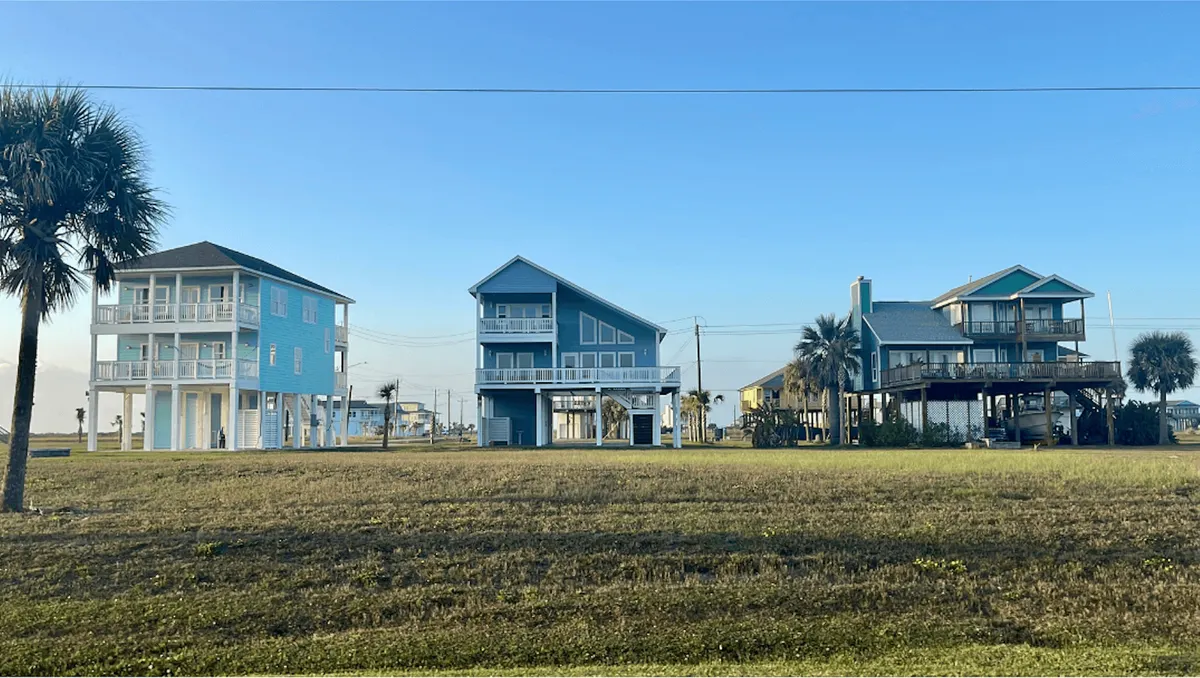
Seamless gutters on a coastal Texas home near Galveston Bay
Bay-area homes require gutter materials and installation techniques designed for persistent salt-air exposure.

Waterfront Homes and Bayside Neighborhoods

The Todville Road corridor represents Seabrook's premium residential address — custom-built waterfront homes with complex rooflines and direct bay exposure that demand copper or high-grade aluminum gutter systems chosen for both marine durability and visual appeal. Older neighborhoods near the original town center feature modest frame homes with gutter systems that have endured decades of salt exposure and are overdue for replacement.

Across both communities, the elevation profile is a constant concern. Most residential areas sit between five and fifteen feet above sea level, which means gutter systems play an outsized role in foundation protection. Without effective gutters channeling rainwater away from foundations, the saturated clay soils common to the area can shift and settle, creating structural issues far more expensive than the gutter upgrade that might have prevented them.

Material Considerations for Bay-Area Properties

Galvanized steel is essentially unsuitable for these bay-area communities — the zinc coating breaks down under persistent chloride exposure, leaving underlying steel vulnerable to rust within three to five years. Painted aluminum (.032 gauge) with stainless steel fasteners represents the best cost-effective solution, while copper systems remain the gold standard for premium waterfront properties, developing a protective patina that improves corrosion resistance over time and lasting 50 years or more.

Signs a Bay-Area Gutter System Needs Attention

Salt corrosion often progresses behind the visible surface of a gutter system, making it easy to overlook until damage becomes severe. Kemah and Seabrook homeowners should watch for these indicators that a gutter system is underperforming or approaching failure:

White or greenish powder on fasteners and brackets: Oxidation residue indicating active corrosion, which accelerates during humid summer months when salt-laden moisture sits on metal surfaces without drying.

Rust-colored stains on fascia or siding: A sign that gutter material or fasteners have corroded through their protective coating — often the first visible symptom of fastener failure.

Standing water or slow drainage: Indicates lost grade from sagging or blockages from the salt-and-debris sludge common in bay-area gutters, concentrating corrosive moisture against the gutter material.

Visible separation at gutter seams: Salt crystals work into micro-gaps during thermal cycling, preventing clean resealing and channeling water directly onto fascia board.

Overflowing during moderate rain: A system that overflows before tropical-storm intensity is either undersized, clogged, or both — a serious concern where summer afternoons can deliver two inches of rain in 30 minutes.

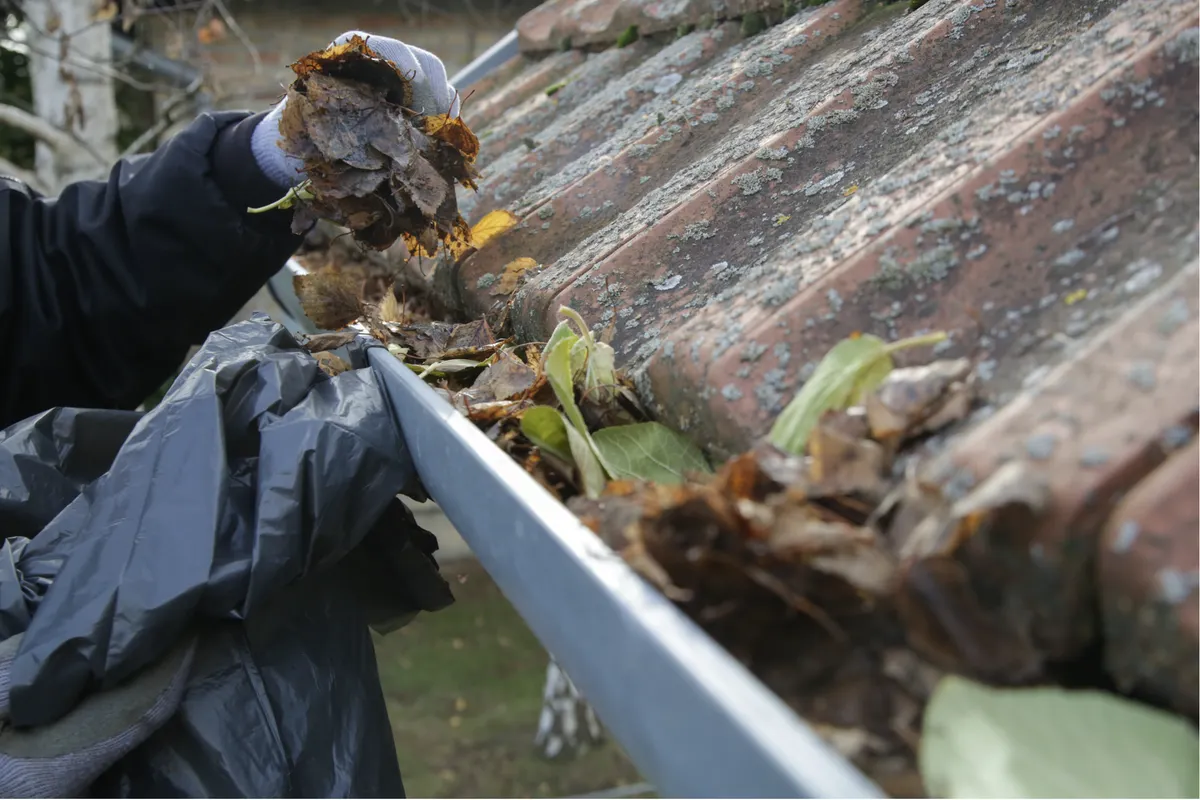
Debris and salt buildup removed from a gutter channel during professional cleaning
Salt residue and organic debris accumulate quickly in bay-area gutter systems, accelerating corrosion between service visits.

Gutter Services for Kemah & Seabrook

Every service is tailored for the salt air and storm exposure unique to these bay-area waterfront communities.

Gutter Installation

New seamless aluminum and copper gutter systems sized for Kemah and Seabrook's annual rainfall and salt-air exposure. Marine-grade fasteners and coated hangers prevent galvanic corrosion at every attachment point along the roofline.

Installation details

Gutter Repair

Bay-area gutter systems develop corrosion pinholes, sagging sections from wind stress, and joint separations faster than inland counterparts. Targeted repairs address salt damage, storm impact, and the joint failures common along Seabrook's waterfront homes.

Repair details

Gutter Cleaning

Salt residue, live oak debris, and wind-deposited sand create a thick sludge in bay-area gutters that standard cleaning cannot address. Thorough flush-and-inspect service removes the mineral buildup that accelerates corrosion from inside the gutter channel.

Cleaning details

Gutter Guards

Micro-mesh and marine-rated guard systems engineered to withstand the wind uplift, salt corrosion, and heavy debris loads common to Kemah and Seabrook. Keeps live oak leaves and wind-blown sand out of gutters without restricting water flow during tropical downpours.

Guard options

Gutter Inspection

Comprehensive evaluation of gutter condition, fastener integrity, and drainage performance. Particularly valuable for Seabrook waterfront properties after storm season, identifying salt corrosion and wind damage before small issues become structural problems.

Schedule inspection

Bay-Area Homes Deserve Bay-Area Expertise

Gutter systems engineered for the salt, wind, and rainfall unique to Kemah and Seabrook.

(409) 741-9557 Call for a Free Estimate

Bay Exposure, Salt Air, and Storm Season

Salt Air and Humidity

Prevailing southeast breezes off Galveston Bay carry continuous chloride exposure that attacks metal surfaces, corrodes fasteners, and degrades protective coatings. Humidity levels along the bayfront regularly exceed 80 percent, creating a near-constant moist film that accelerates corrosion. Only marine-grade aluminum, copper, or factory-finished steel systems provide reliable long-term performance here.

Rainfall and Storm Risk

The upper Texas coast receives approximately 50 inches of rainfall annually, with individual storm events delivering four to eight inches in hours. At five to fifteen feet above sea level, these communities sit within the Category 2+ storm surge zone — making properly sized gutters essential for both everyday drainage and post-storm recovery. Sustained winds of 15 to 25 mph are common even outside named storms, so fasteners and guards must be rated for wind uplift.

Seasonal Maintenance Timing

A spring cleaning in April or early May removes accumulated pollen, live oak catkins, and salt residue before summer rain season — and doubles as a pre-hurricane inspection. A second service in October or November addresses storm-deposited debris after peak hurricane season. Waterfront properties with heavy live oaks may benefit from a third mid-summer cleaning. The mild, dry window from late October through March is ideal for replacement or major repair projects.

Quick Climate Facts

Annual Rainfall ~50 inches
Avg. Humidity 75 – 85%
Elevation 5 – 15 ft
Hurricane Zone Cat 2+ surge risk
Salt Exposure High (bayfront)
Peak Storm Season Jun – Nov
Prevailing Winds SE 15 – 25 mph
Soil Type Expansive clay

Gutter System Lifespan Along the Bay

Understanding how long a gutter system will last in the Kemah and Seabrook environment helps property owners plan maintenance budgets and replacement timelines realistically. The numbers below reflect observed performance in bay-area conditions, which differ significantly from manufacturer warranties based on inland testing environments.

Galvanized steel: 5 to 8 years before functional failure. Not recommended for new installations in bay-area properties. Existing galvanized systems should be prioritized for replacement during the next maintenance cycle.

Painted aluminum (.027 gauge): 8 to 12 years with regular maintenance. The thinner gauge is adequate for protected inland sections of a roofline but may dent under heavy debris impact from tropical storms.

Painted aluminum (.032 gauge): 12 to 18 years with regular maintenance. The recommended minimum specification for Kemah and Seabrook residential installations. The heavier gauge resists denting and provides better structural integrity against wind forces.

Copper (16 oz or 20 oz): 40 to 60+ years. The patina that develops in bay-area conditions actually enhances corrosion protection. The premium upfront investment is justified for high-value waterfront properties where replacement frequency and aesthetic degradation carry meaningful cost implications.

Regardless of material, the fasteners and sealants used during installation are the most common points of early failure. Stainless steel screws, marine-grade sealant, and aluminum (not galvanized) hidden hangers are non-negotiable components of any bay-area gutter installation that is expected to reach its full material lifespan.

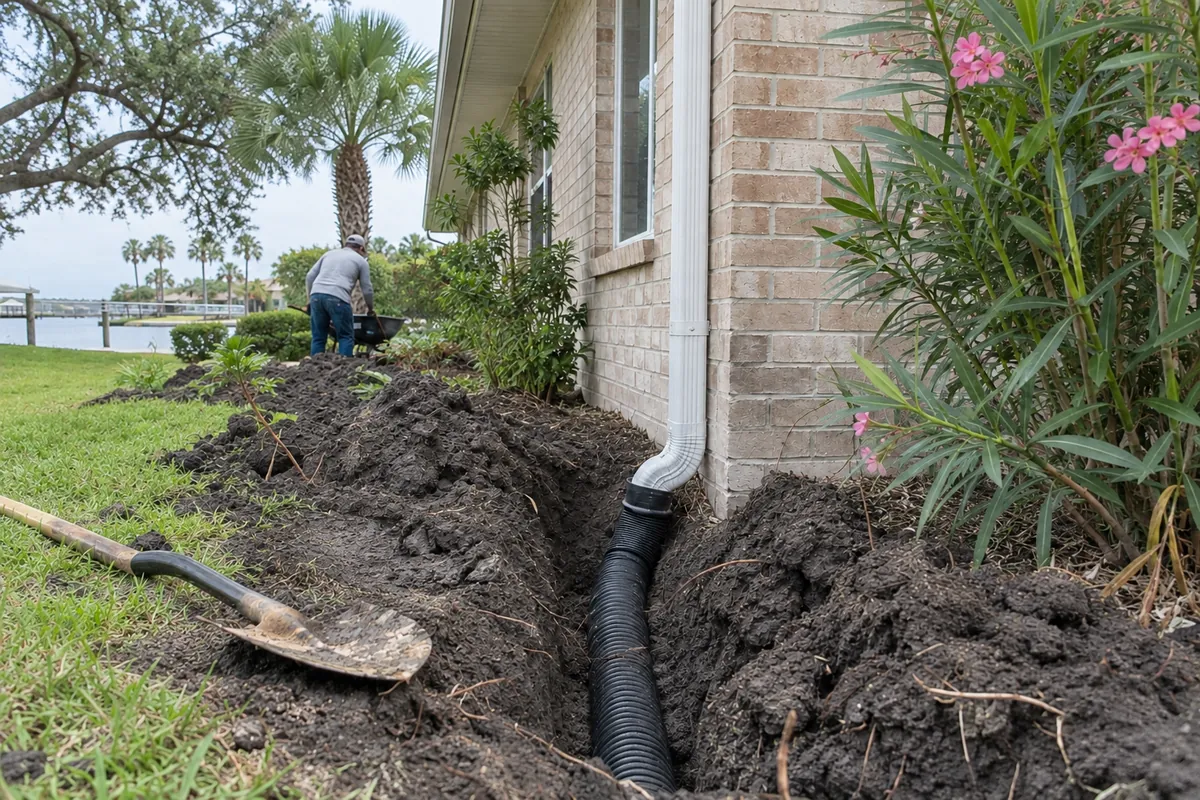
Downspout extension directing water away from a home foundation
Properly extended downspouts are essential in low-elevation communities where gravity alone cannot move water away from foundations.

Nearby Service Areas

Galveston Clean Gutters serves communities across Galveston County and the Clear Lake region.

League City

The largest city in Galveston County, with rapidly expanding suburban neighborhoods alongside established Clear Lake-area communities. League City's mix of new construction and 1970s-era NASA-boom housing creates varied gutter service needs across the city.

View League City

Bacliff & San Leon

Unincorporated bayfront communities south of Kemah with some of the most direct Galveston Bay exposure in the service area. Older fishing-community homes here frequently need complete gutter system replacement with marine-grade aluminum or copper.

View Bacliff & San Leon

Dickinson

A growing community along the Dickinson Bayou corridor where bayou flooding, heavy rainfall, and expanding residential development create persistent drainage challenges that properly sized gutter systems help address.

View Dickinson

Friendswood

An established residential community straddling the Galveston-Harris county line, known for its mature pecan and oak tree canopy. The heavy leaf and branch debris generated by these large trees makes gutter guards a popular upgrade for Friendswood homeowners.

View Friendswood

Texas City

An industrial and residential community on the western shore of Galveston Bay. The combination of industrial airborne particulates and bay salt exposure creates a uniquely aggressive environment for exterior metal components including gutter systems.

View Texas City

Galveston Island

The barrier island at the heart of the service area, where the most intense salt exposure, hurricane wind risk, and storm surge threat demand the highest-grade gutter materials and the most meticulous installation techniques available.

View Galveston Island

Gutters and Foundation Protection at Low Elevation

The combination of expansive clay soils and low elevation makes foundation protection especially urgent in Kemah and Seabrook. The Beaumont clay formation expands when wet and contracts when dry, creating a heaving cycle that can crack slabs and shift piers. Functional gutters interrupt this cycle by channeling thousands of gallons of roof runoff away from the foundation perimeter during each heavy rain event.

In flat, low-lying terrain where lots may have only inches of grade change, downspout extensions of four to six feet minimum are necessary to prevent water from pooling back toward the slab. Underground drain lines connected to street drainage offer the most reliable long-term solution. The financial math is clear: a complete gutter replacement costs a fraction of what foundation repair runs in this area.

Kemah & Seabrook Gutter FAQ

How often should gutters be cleaned in a bayfront community?

Bay-area homes in Kemah and Seabrook should schedule gutter cleaning at least twice per year: once in late spring after the live oak pollen and leaf drop season, and again in late fall before the winter rain cycle begins. Waterfront properties with direct bay exposure may benefit from a third cleaning in early fall, after peak hurricane season deposits additional wind-blown debris. The salt residue that accumulates inside gutter channels between cleanings accelerates corrosion, so more frequent service directly extends the functional life of the gutter system.

What gutter materials hold up best in salt air?

Marine-grade aluminum (.032 gauge or heavier) with a factory-applied baked enamel finish provides the best balance of durability and cost for most Kemah and Seabrook homes. Copper is the premium choice for waterfront properties, developing a protective patina that actually improves corrosion resistance over time. Standard galvanized steel is not recommended for any bay-area installation, as the zinc coating degrades quickly under constant chloride exposure.

Can existing gutters be retrofitted for better storm performance?

In many cases, yes. Upgrading fasteners from standard spikes to heavy-duty hidden hangers with stainless steel screws significantly improves wind resistance. Adding gutter guards reduces debris accumulation that causes overflow during intense storms. However, if the existing gutter material is already showing salt corrosion, the most effective investment is full replacement with marine-rated materials rather than reinforcing a system that is approaching the end of its functional life.

How does low elevation affect gutter system design?

At five to fifteen feet above sea level, Kemah and Seabrook homes cannot rely on gravity-assisted surface drainage the way hillside properties can. Gutter systems must be precisely graded to maintain positive flow toward downspouts, and downspout extensions should direct discharge at least four to six feet from the foundation. In flood-prone areas, some properties benefit from connecting downspouts to underground drainage lines that carry water to the street or a designated drainage easement.

Should gutters be inspected before hurricane season?

A pre-season gutter inspection in May or early June is strongly recommended for every bay-area property. The inspection identifies loose fasteners, corroded joints, and clogged downspouts that could fail under storm conditions. Addressing these issues before the June-through-November hurricane season is far less expensive than emergency repairs after a tropical event has caused water intrusion damage to fascia boards, soffits, or interior walls.

Protect Your Waterfront Home from Bay Area Elements

Corrosion-resistant gutter systems installed by specialists who understand the salt air, storm exposure, and drainage demands unique to Kemah and Seabrook.

(409) 741-9557
Call (409) 741-9557