Where Two Counties Meet
Friendswood occupies a genuinely unusual position on the Texas map. The city straddles the boundary between Galveston County and Harris County, placing roughly two-thirds of its residents in Galveston County and the remaining third inside the sprawling Harris County footprint. That geographic split shapes everything from school district enrollment to drainage infrastructure, and it makes Friendswood one of the more distinctive communities along the upper Gulf Coast. With a population hovering near 40,000, Friendswood maintains a tight-knit suburban identity even as the greater Houston metro continues to expand around it.
The city traces its origins to a Quaker settlement established in 1895, and that sense of community stewardship still runs deep. Residents consistently rank Friendswood among the best places to live in the Houston area, citing its excellent public schools, low crime rates, and the mature tree canopy that shades virtually every residential block. Friendswood Independent School District and Clear Creek Independent School District both serve portions of the city, and both carry reputations that draw families from across the region. Streets lined with towering live oaks and pecan trees give the city a character that newer master-planned suburbs simply cannot replicate.
Clear Creek winds through the heart of Friendswood, providing a natural greenway that doubles as the primary drainage corridor for much of the city. Under normal conditions, that creek adds scenic value and walking trails. Under storm conditions, it becomes a serious concern. Hurricane Harvey in August 2017 pushed Clear Creek well beyond its banks, flooding hundreds of Friendswood homes and causing damage that took years to repair. Entire neighborhoods along the creek corridor saw water levels that exceeded anything in recorded history, and the disaster fundamentally changed how Friendswood homeowners think about water management on their own properties.
Drainage as a Priority
Since Harvey, Friendswood has invested heavily in drainage improvements at the municipal level, but individual property owners carry significant responsibility as well. Properly functioning gutters represent the first line of defense in a chain that extends from roof to downspout to yard drainage to street inlet to Clear Creek. When any link in that chain fails, water pools where it should not, and the consequences compound quickly. Foundation settling, landscape erosion, soffit rot, and mosquito breeding are all downstream effects of neglected gutters in a city that receives approximately 50 inches of rainfall per year.
Friendswood sits at the intersection of two counties, two school districts, and one undeniable reality: with Clear Creek running through town and 50 inches of annual rainfall, every gutter on every roofline matters.
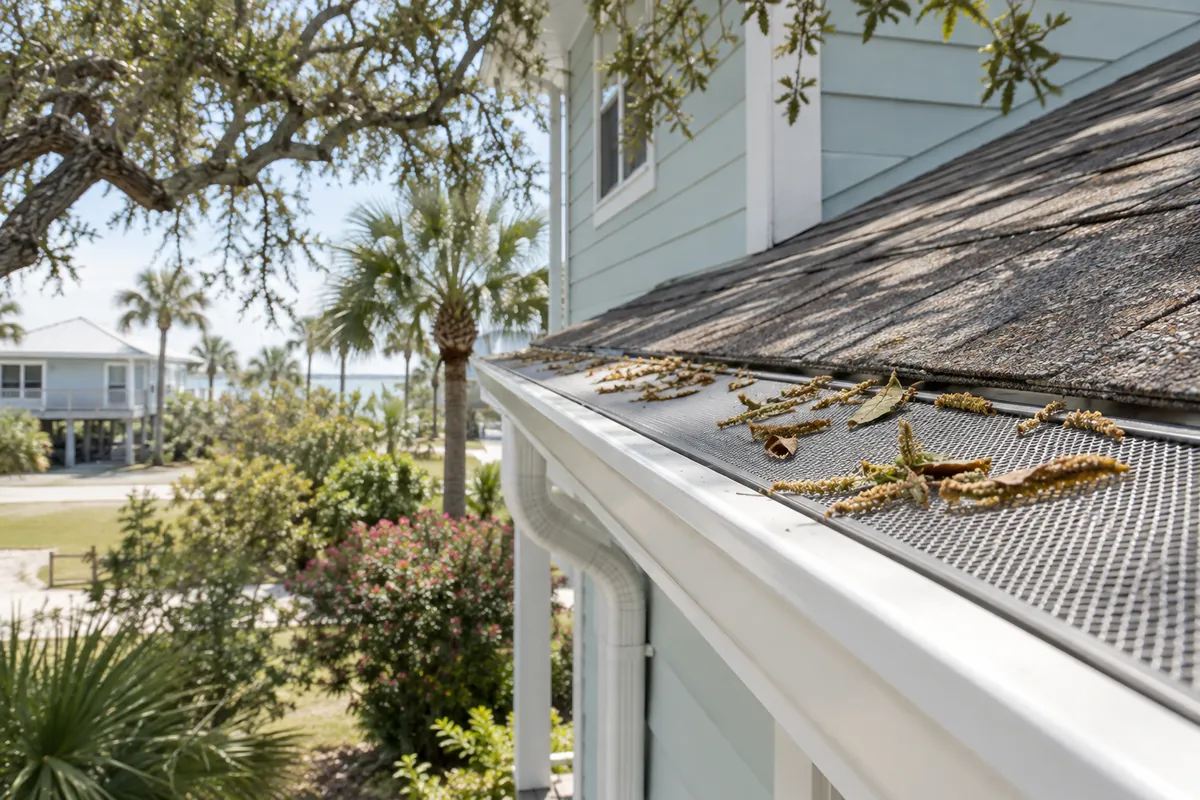
The city's tree canopy, while one of its most prized features, directly increases gutter maintenance demands. Mature pecan trees shed catkins in spring and heavy nutshells in fall. Live oaks drop leaves in late winter and send a near-constant stream of small twigs and acorns into gutter troughs throughout the year. Pine trees add needles that mat together inside downspouts. A homeowner who skips even one seasonal cleaning can find gutters completely blocked before the next heavy rain arrives, and in Friendswood, the next heavy rain is never far away.
For these reasons, gutter services in Friendswood extend well beyond simple installation. The community requires a full spectrum of maintenance, repair, and upgrade work tailored to the specific demands of a flood-aware city built beneath a dense tree canopy. Galveston Clean Gutters connects Friendswood homeowners with contractors who understand those demands and who bring the right solutions for homes on both sides of the county line.
Property Landscape
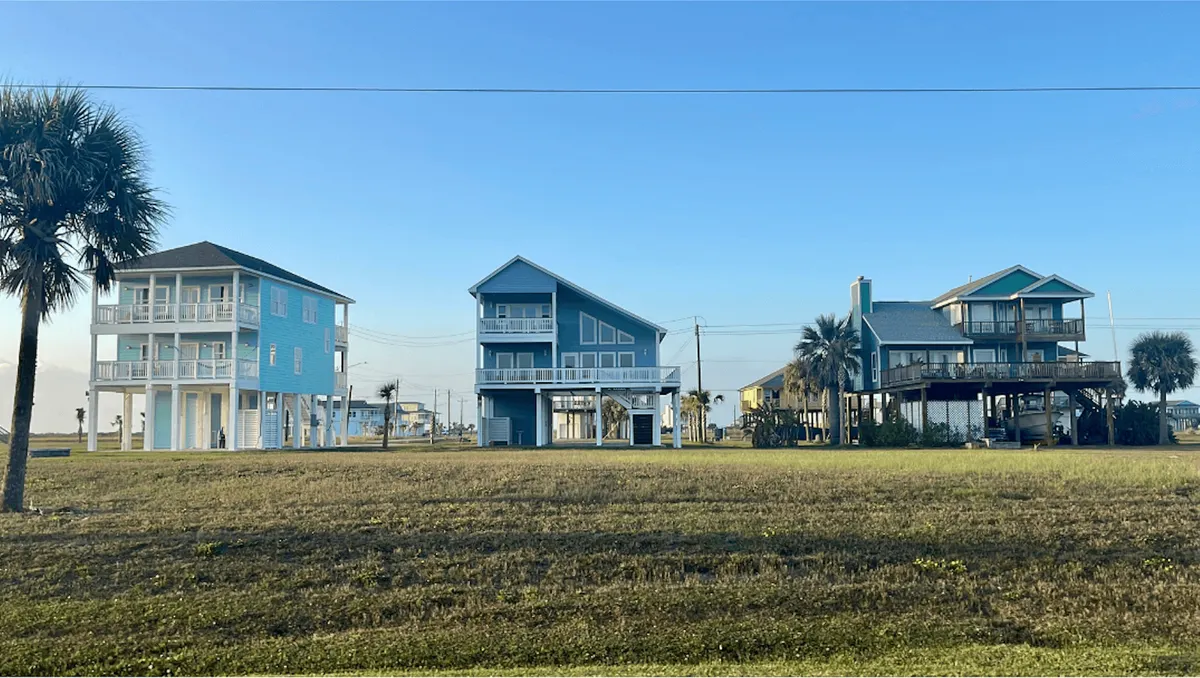
The Friendswood housing stock tells the story of a city that grew steadily across three decades. The majority of homes were built between the 1970s and the 1990s, and they sit on generous wooded lots that were once part of the rural landscape between Houston and Galveston. These are predominantly single-family residences, many with brick exteriors, pitched rooflines, and the kind of mature landscaping that only 30 to 50 years of growth can produce. Streets in the older sections of town often feel more like wooded corridors than suburban blocks, with canopy trees arching overhead and root systems pushing through sidewalks.
Heritage Park, one of Friendswood's original residential neighborhoods, features homes built primarily in the 1970s on lots that average a quarter-acre or more. The tree coverage in Heritage Park is among the densest in the city, with pecan, live oak, and loblolly pine dominating the canopy. Gutter systems on these homes frequently show their age, and many still carry the original 5-inch aluminum troughs installed during construction. After Harvey revealed how quickly aging gutters fail under extreme conditions, a significant number of Heritage Park homeowners have upgraded to 6-inch seamless systems with reinforced hangers.
Newer Development Zones
West Ranch, a newer master-planned community on the western edge of Friendswood, represents the other end of the spectrum. Homes in West Ranch were built primarily between 2005 and 2020, and they feature modern architectural styles with more complex rooflines, multiple valleys, and steeper pitches. These rooflines demand more linear feet of guttering and more carefully placed downspouts to manage the water flow from each section of roof. While the trees in West Ranch are younger and produce less debris, the roof complexity itself makes proper gutter design essential from day one.
Friendswood Lakes, another established neighborhood in the Galveston County portion of the city, sits adjacent to several small retention ponds that were originally designed to handle runoff. Many of these ponds reached capacity during Harvey, underscoring the importance of distributed drainage at the individual property level. Homes near the lake areas tend to have slightly lower lot elevations, which makes functional gutters and well-directed downspouts even more critical for keeping foundations dry. The clay-heavy soils common in this part of Galveston County expand when wet and contract when dry, creating a cycle that can shift foundations if water is not routed away from the slab consistently.
Across all of Friendswood's neighborhoods, one pattern holds: the mature trees that define the city's character also create its most persistent gutter challenge. Pecan trees produce a heavy load of husks and catkins. Live oaks shed leaves and generate dense pollen tassels every spring. Pine trees contribute a steady stream of needles that compact inside gutter troughs and resist water flow. A typical Friendswood home needs gutter cleaning at least three times per year, and properties surrounded by multiple canopy species may require quarterly service to stay clear.
Homes built before Harvey often need gutter upgrades. Wider troughs, reinforced hangers, and properly sized downspouts turn aging systems into flood-ready infrastructure.
Solutions for Every Roofline
From 1970s brick ranch homes in Heritage Park to modern two-story builds in West Ranch, Friendswood properties need gutter systems matched to their specific architecture and tree exposure.
Gutter Installation
Seamless aluminum systems sized for Friendswood rooflines. Six-inch troughs recommended for homes under heavy pecan and live oak canopy, with hurricane-rated hangers spaced for storm resistance.
Learn More →Gutter Repair
Sagging troughs, leaking seams, and storm-loosened hangers are common across Friendswood's older neighborhoods. Targeted repairs restore drainage before small problems become foundation issues.
Learn More →Gutter Cleaning
Three-season cleaning schedules are the minimum for most Friendswood homes. Pecan husks, live oak leaves, and pine needle buildup require professional clearing to keep water flowing toward downspouts.
Learn More →Gutter Guards
Micro-mesh guards rated for heavy debris loads keep Friendswood gutters clear between cleanings. Particularly valuable under pecan and pine trees, where seasonal debris can block troughs within weeks.
Learn More →Downspout Services
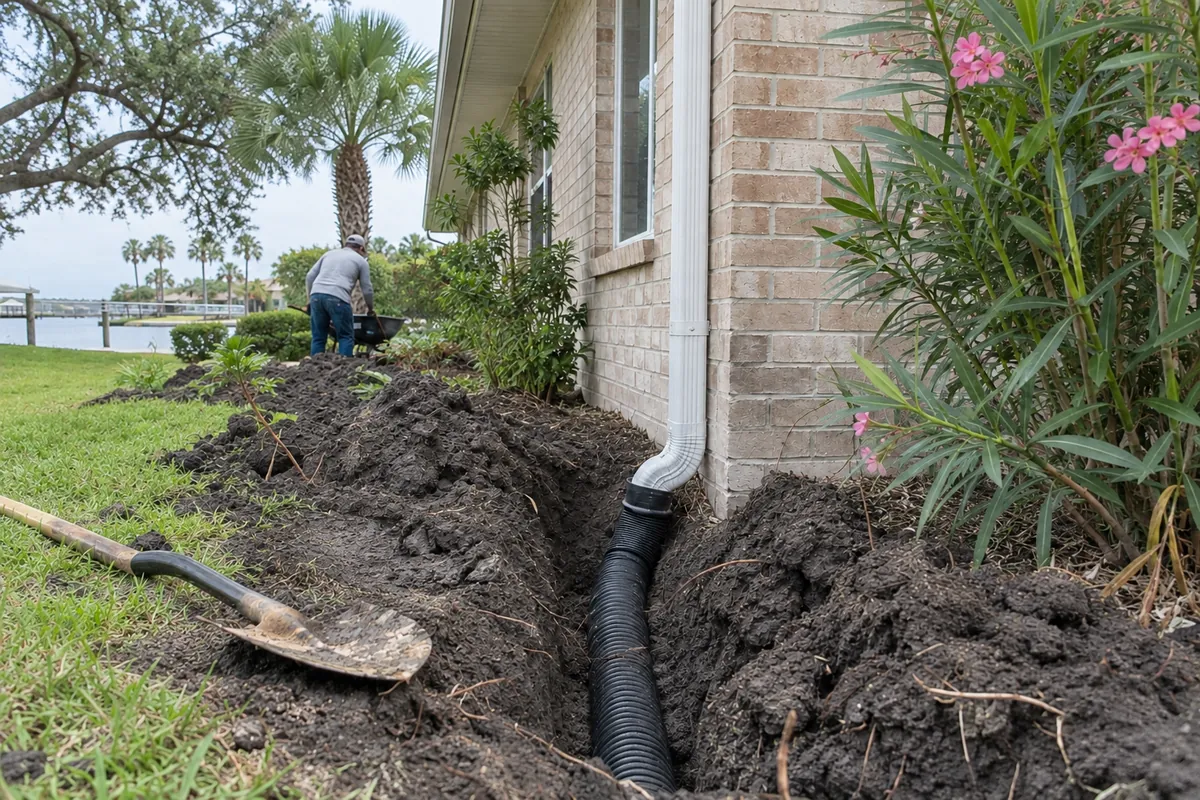
Proper downspout placement and underground extensions route water away from Friendswood's clay-heavy foundations. Critical for homes near Clear Creek and in lower-elevation neighborhoods like Friendswood Lakes.
Learn More →Ready to Upgrade Your Friendswood Gutters?
Free estimates for homeowners on both sides of the county line.
Why Friendswood Gutters Work Harder
Friendswood receives approximately 50 inches of rainfall annually, placing it squarely in one of the wettest corridors along the upper Gulf Coast. That rainfall is not evenly distributed. The heaviest downpours arrive during late spring and early fall, often dumping two to four inches in a single afternoon thunderstorm. Tropical systems can deposit 10 or more inches across a 24-hour period, as Harvey demonstrated in catastrophic fashion when some Friendswood rain gauges recorded over 30 inches in a matter of days.
The city sits within the Clear Creek watershed, a drainage basin that collects runoff from a wide swath of northern Galveston County and southern Harris County. When rainfall overwhelms street inlets and ditch systems, Clear Creek rises rapidly. Every property that feeds runoff into this watershed bears a share of responsibility for managing water at the source, and that starts at the roofline. Gutters that dump water directly against foundations or into already saturated yards compound the flooding risk for the entire neighborhood.
Friendswood's tree canopy, while beautiful, creates a secondary challenge on top of the rainfall itself. Mature pecan trees produce heavy catkin loads in spring and dense nutshell debris in fall. Live oaks drop their leaves in a concentrated burst during late February and March, right before spring storm season begins. Loblolly pines shed needles year-round, and those needles compact inside gutter troughs to form a dense mat that resists water flow even during light rain. The combination of high rainfall and heavy debris loads means Friendswood gutters face more operational stress than systems in most inland Texas cities.
Foundation protection adds another dimension to the climate equation. The clay soils beneath Friendswood expand significantly when saturated and shrink when they dry out. This expansion-contraction cycle puts constant stress on concrete slab foundations, and uncontrolled water pooling near the perimeter accelerates the damage. Properly sized gutters paired with downspout extensions that carry water at least four to six feet from the foundation represent the most cost-effective defense against clay soil movement.
Friendswood Quick Facts
- Annual Rainfall: ~50 inches per year
- Watershed: Clear Creek drainage basin
- Harvey Impact: 30+ inches in days; widespread flooding
- Primary Debris: Pecan husks, live oak leaves, pine needles
- Soil Type: Heavy clay, prone to expansion/contraction
- Recommended Cleaning: Minimum 3 times per year
- County Split: ~2/3 Galveston County, ~1/3 Harris County
- Population: Approximately 40,000 residents
Nearby Service Areas
Galveston Clean Gutters serves communities throughout Galveston County and the surrounding region. Explore gutter services near Friendswood.
Protect Your Friendswood Home from Foundation Damage
Free estimates, transparent pricing, and professional gutter services for homeowners across both Galveston and Harris counties. Call today to schedule an inspection.
Call For Free Estimate