The Fastest-Growing Market in Galveston County
League City holds a distinction that reshapes the gutter conversation across the entire county: it is the largest city in Galveston County by population, home to more than 115,000 residents as of the latest census estimates. That figure represents a growth trajectory that has nearly doubled the city's population since the early 2000s, driven by a steady influx of families drawn to top-rated Clear Creek ISD schools, proximity to NASA's Johnson Space Center, and a housing market that delivers more square footage per dollar than neighboring Harris County suburbs. For gutter professionals, that growth translates into thousands of new rooflines each year — and a persistent gap between what builders install and what the local climate demands.
The master-planned communities that define modern League City — South Shore Harbour, Tuscan Lakes, Legacy at Bay Area, Bay Colony, and Magnolia Creek among them — share a common construction pattern. Builders typically install standard 5-inch K-style aluminum gutters with hangers spaced at 36 inches, which represents the minimum acceptable configuration under the International Residential Code. In a market that receives roughly 50 inches of rainfall annually and sits on expansive clay soils prone to dramatic volume changes, that minimum specification often proves inadequate within the first few years of occupancy. Homeowners in these communities frequently report overflowing gutters during heavy downpours, water pooling near foundations, and early signs of soil settlement that trace directly back to undersized drainage systems.
Why Clay Soil Changes Everything
Foundation movement is the number-one concern among League City homeowners, and for good reason. The city sits on a thick layer of Beaumont clay, a highly expansive soil formation that swells when saturated and contracts sharply during drought periods. This expansion-contraction cycle places enormous lateral and vertical pressure on slab-on-grade foundations, which account for the vast majority of League City homes built after 1990. A single season of uncontrolled roof runoff — caused by clogged, damaged, or undersized gutters — can introduce enough moisture on one side of a foundation to create differential settlement, the asymmetric sinking that produces cracked drywall, sticking doors, and sloped floors.
Proper gutter sizing and downspout placement function as the first line of defense against that scenario. In League City's soil conditions, gutter contractors who understand the local geology routinely recommend upgrading from builder-grade 5-inch systems to 6-inch seamless aluminum with 3-by-4-inch downspouts, spaced no more than every 30 linear feet of gutter run. Downspout extensions should carry water at least four to six feet away from the foundation perimeter — a detail that many new-construction installations overlook entirely. The cost difference between a 5-inch and 6-inch system is modest, typically $2 to $4 per linear foot, but the foundation protection difference over a 10- to 15-year period can prevent repair bills that commonly reach $8,000 to $15,000.
Foundation repair in League City averages $8,000 to $15,000 per incident. Upgrading to a properly sized 6-inch gutter system costs a fraction of that amount and represents one of the most cost-effective foundation protection investments available to homeowners on Beaumont clay.
New construction in League City shows no signs of slowing. The city continues to annex land along its southern and western corridors, and developers are actively building in the Lago Mar, Sierra Vista, and Harvest Green South districts. Each new phase brings hundreds of homes that will eventually need gutter assessments as builder warranties expire and the realities of Gulf Coast rainfall begin to expose drainage shortcomings. For homeowners who purchased in the first wave of development in communities like South Shore Harbour — many of those homes now 20 to 30 years old — a full gutter replacement is often overdue, particularly where original galvanized steel or vinyl systems have corroded or warped beyond effective service life.
League City's position within the Clear Lake corridor also means that many homeowners work in aerospace, petrochemical, or medical industries with demanding schedules. Galveston Clean Gutters serves League City with free, no-obligation estimates that accommodate the scheduling realities of a commuter-heavy workforce.
From NASA-Era Ranches to Brand-New Master Plans
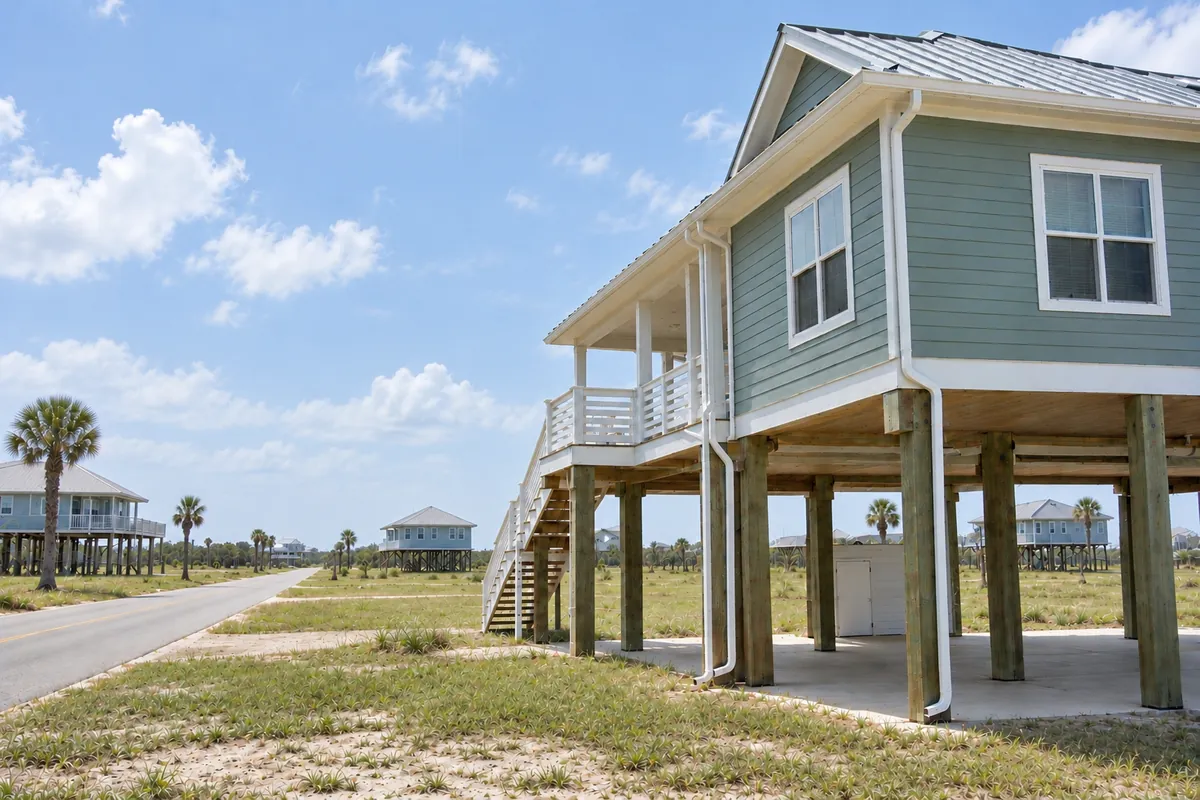
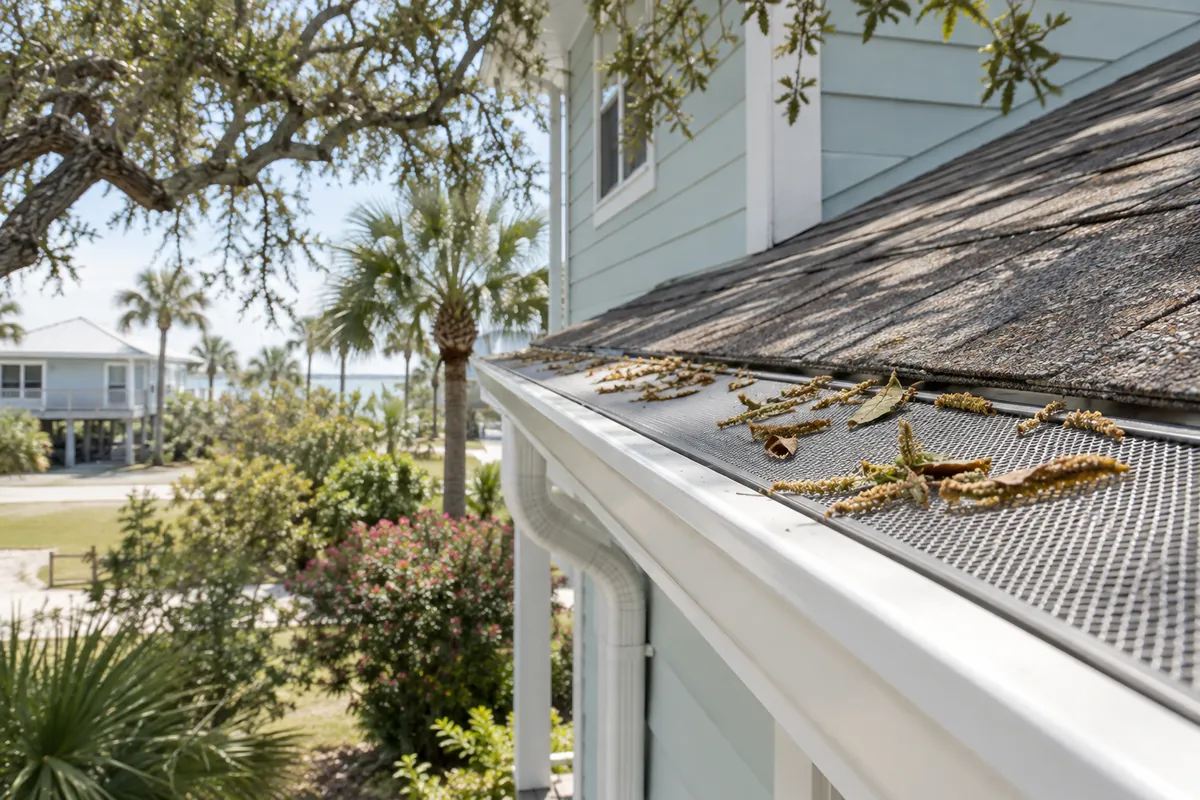
League City's housing stock spans more than five decades of development, creating a gutter market with two distinctly different sets of needs. The northern sections of the city — neighborhoods closest to NASA Road 1 and the Johnson Space Center campus — were largely built during the 1970s and 1980s space-program boom. These established neighborhoods feature single-story ranch homes and two-story colonials on mature, heavily wooded lots where live oaks, pecans, and Chinese tallow trees have grown into full canopy coverage. Gutters on these properties face a relentless debris load: live oak catkins in spring, pecan shells and leaves in fall, and Chinese tallow seed pods that clog downspouts with a waxy residue that is notoriously difficult to flush.
For homeowners in these older neighborhoods, gutter replacement is often the most practical path forward. Many of these homes still carry their original sectional aluminum or galvanized steel gutters, which have developed leaks at every seam joint after decades of thermal expansion and contraction. A full replacement with modern seamless aluminum eliminates those failure points entirely, and the addition of micro-mesh gutter guards can reduce the cleaning burden from quarterly visits to once or twice per year. The investment is particularly worthwhile given that many of these established neighborhoods sit at lower elevations near Clear Creek and its tributary bayous, making proper drainage critical during heavy rain events.
New Construction: The Upgrade Opportunity
On the southern and western edges of League City, the landscape shifts dramatically. Master-planned communities like Tuscan Lakes, Bay Colony, and Lago Mar feature homes built within the last five to ten years on freshly graded lots with minimal mature vegetation. While the debris load is lighter in these newer developments, the gutter challenges are structural rather than environmental. Builder-grade gutter systems in these communities routinely use thinner-gauge aluminum, wider hanger spacing, and minimal downspout coverage — specifications that meet code requirements on paper but underperform during the intense rainfall events that characterize May through October along the upper Texas coast.
Upgrading from a builder-grade 5-inch system to a professionally installed 6-inch seamless system addresses the volume problem directly. A 6-inch gutter handles approximately 40 percent more water volume than a 5-inch profile, which makes a meaningful difference during storms that drop one to two inches per hour — a common occurrence in League City during summer convective events. The wider profile also reduces the risk of wind-driven rain overshooting the gutter lip, a problem that homeowners in exposed subdivisions without mature tree cover frequently report.
Clear Creek remains the defining flood concern for League City. The creek and its tributaries drain a watershed that extends well into Harris County, and downstream sections through League City have a documented history of overbank flooding during major rain events. Homes within the Clear Creek watershed benefit from oversized gutter systems and extended downspout runs that direct water toward the street or designated drainage easements rather than allowing it to pool near foundations. The Harris-Galveston Subsidence District's monitoring data confirms that the region continues to experience measurable land subsidence, which gradually reduces the natural drainage gradient and makes engineered water management — starting at the roofline — increasingly important with each passing decade.
Gutter Services for League City Homes
From builder-grade upgrades in new master-planned communities to full replacements in established NASA-corridor neighborhoods, every service is tailored to League City's clay soil and high-rainfall conditions.
Gutter Installation
Seamless 5-inch and 6-inch aluminum systems custom-fabricated on-site for League City homes. Oversized 6-inch profiles recommended for new construction on clay soils where foundation protection demands maximum water management capacity.
Learn More →Gutter Repair
Seam resealing, hanger replacement, and slope correction for aging systems in League City's established NASA-corridor neighborhoods. Addressing leaks and sags before they cause foundation-damaging water pooling on Beaumont clay.
Learn More →Gutter Cleaning
Debris removal and downspout flushing for League City properties surrounded by live oaks, pecans, and Chinese tallow trees. Recommended two to three times annually for mature-canopy lots near Clear Creek and its tributaries.
Learn More →Gutter Guards
Micro-mesh and screen guard systems that block catkins, pecan shells, and tallow-tree debris while maintaining full water flow. Especially valuable for older League City lots with 40-year-old canopy trees producing heavy seasonal debris loads.
Learn More →Downspout Services
Downspout installation, rerouting, and underground drainage extensions designed to carry roof runoff at least four to six feet from League City foundations. Critical for protecting slab-on-grade construction on expansive Beaumont clay soils.
Learn More →Questions about your League City gutters?
Free estimates available for all League City neighborhoods — no obligation.
League City's Climate and Why It Matters for Gutters
League City receives approximately 50 inches of rainfall per year, placing it well above the national average of 38 inches. The bulk of that precipitation falls between May and October, when subtropical moisture from the Gulf feeds intense convective thunderstorms capable of dropping one to three inches in under an hour. These high-intensity events are precisely the conditions that overwhelm undersized gutter systems, sending sheets of water cascading over gutter lips and directly onto foundation-adjacent soil.
Unlike homes on Galveston Island, League City properties sit far enough inland to avoid the worst of the direct salt-air corrosion that attacks coastal gutter hardware. Standard seamless aluminum systems perform well in League City without the marine-grade upgrades required on the island. However, the city's subtropical humidity — averaging 75 to 80 percent year-round — still creates a corrosion-friendly environment, particularly for sectional gutters with exposed seam joints and for galvanized steel systems that have lost their protective zinc coating over time.
The Clear Creek watershed is the dominant flood risk factor for League City. Clear Creek originates in western Harris County and flows through the heart of League City before emptying into Clear Lake and ultimately Galveston Bay. During major rain events, the creek and its network of tributary bayous can rise rapidly, and homes within the watershed — even those outside the FEMA-designated 100-year floodplain — experience elevated groundwater levels that reduce the soil's ability to absorb roof runoff. In these conditions, gutter systems that direct water efficiently toward street drainage or designated easements become critical infrastructure rather than cosmetic additions.
Clay soil expansion and contraction amplifies every drainage shortcoming. During wet periods, Beaumont clay swells and exerts upward pressure on foundations. During drought, the clay contracts and creates void spaces beneath slabs. A properly designed gutter system with adequate downspout extensions helps maintain consistent moisture levels around the foundation perimeter — the single most important factor in preventing the differential settlement that drives the majority of foundation repair calls in the League City market.
League City Quick Facts
- Annual Rainfall: ~50 inches (32% above national average)
- Peak Rain Season: May through October
- Soil Type: Beaumont clay — highly expansive
- Flood Risk: Clear Creek watershed
- Salt Exposure: Minimal (inland location)
- Humidity: 75–80% average year-round
- Foundation Type: Predominantly slab-on-grade
- Recommended System: 6-inch seamless aluminum with extended downspouts
Communities Near League City
Galveston Clean Gutters serves League City and every surrounding community across Galveston County. Free estimates are available throughout the region.
Friendswood
Established neighborhoods with mature tree canopy and Clear Creek flood exposure. Gutter cleaning and guard installation in high demand.
Dickinson
Growing community along the I-45 corridor with a mix of older homes and new development on Gulf Coast clay soils.
Kemah & Seabrook
Waterfront communities on Clear Lake and Galveston Bay where salt exposure and wind-driven rain demand corrosion-resistant gutter systems.
Texas City
Industrial bayfront city with diverse housing stock from mid-century bungalows to newer subdivisions requiring full-service gutter solutions.
Santa Fe
Rural-suburban community west of I-45 with larger lot sizes and heavy tree coverage driving consistent gutter cleaning demand.
Galveston Island
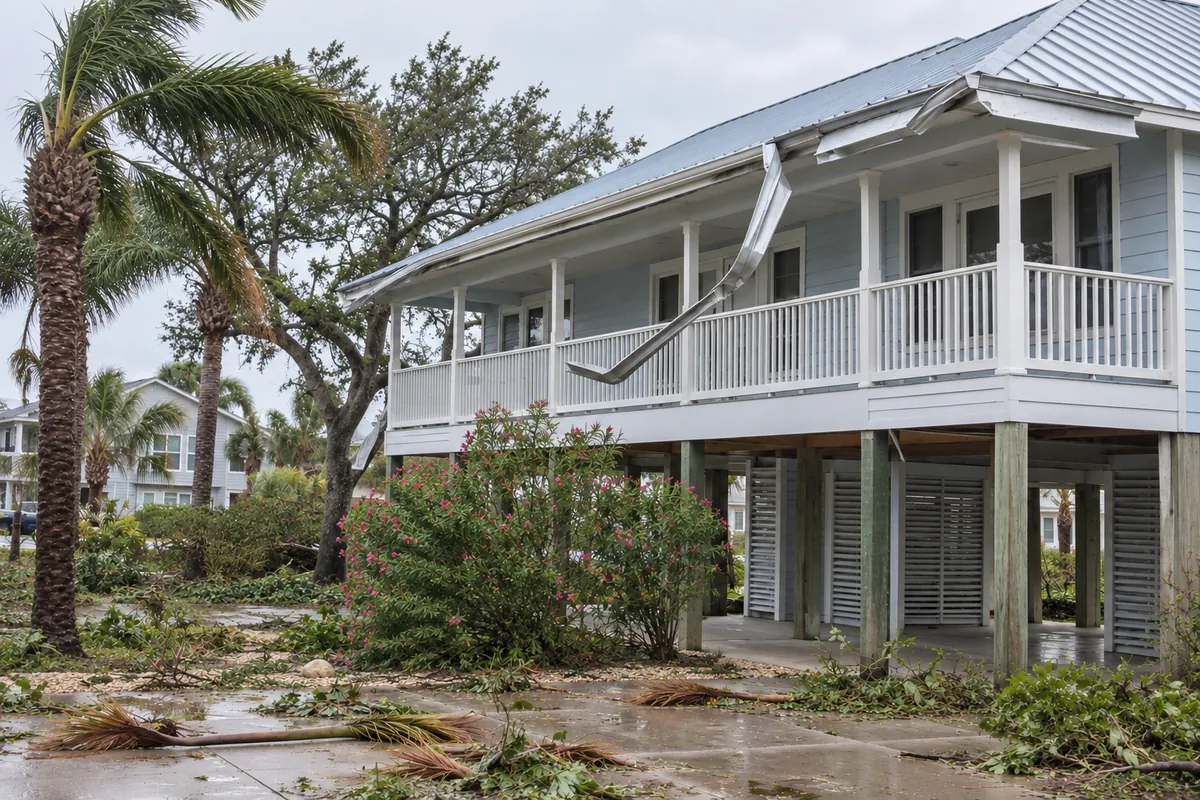
Coastal properties facing direct salt-air corrosion, hurricane-force winds, and elevated pier-and-beam construction challenges.
Protect Your League City Home from Foundation Damage
League City's clay soils and 50 inches of annual rainfall make proper gutter drainage essential. Free estimates are available with no obligation for every League City neighborhood.
(409) 741-9557