Bayou Country Drainage
Dickinson sits along one of Galveston County's most consequential waterways. With a population of roughly 21,000 residents, the city stretches across low-lying terrain shaped by Dickinson Bayou and its network of tributary channels — a drainage system that defines both the community's character and its most persistent vulnerability. When Hurricane Harvey stalled over the region in August 2017, Dickinson Bayou experienced catastrophic flooding that inundated thousands of homes and transformed the city into one of the storm's hardest-hit inland communities. The bayou crested at levels never previously recorded, and entire neighborhoods sat under feet of water for days as the channel simply could not process the volume fast enough. That event reshaped how Dickinson homeowners think about water management at every scale, starting at the roofline.
The bayou system that gives Dickinson its name also creates a ground-saturation dynamic that amplifies every gutter failure. Unlike cities positioned on higher ground, Dickinson's elevation ranges from roughly 10 to 25 feet above sea level, with much of the residential development occupying the lower end of that range. When heavy rains arrive — and in this part of Galveston County, 50 inches of annual rainfall guarantees they arrive frequently — the water table rises quickly, and the clay-heavy soil reaches saturation well before the storm passes. In saturated conditions, roof runoff that spills from clogged or undersized gutters has nowhere to go. It pools against foundations, seeps into crawlspaces, and accelerates the soil expansion that drives slab movement across the entire bayou corridor.
Harvey's Legacy and the New Normal
Hurricane Harvey did not just flood Dickinson — it permanently changed the community's relationship with drainage infrastructure. In the years since the storm, the city has invested in bayou-widening projects, improved stormwater retention, and updated floodplain mapping that reclassified hundreds of properties into higher-risk zones. Homeowners who rebuilt after Harvey overwhelmingly chose to upgrade their gutter systems as part of the reconstruction process, recognizing that even minor improvements in roof-water management compound into significant flood mitigation at the neighborhood scale. A home that efficiently channels every gallon of roof runoff into the street drainage system rather than releasing it at the foundation perimeter removes one more variable from an already stressed watershed.
For properties that survived Harvey without major damage or that were built in the post-storm development wave, gutter assessment remains one of the most practical and cost-effective protective measures available. The bayou's flood behavior has not changed — the channel still responds violently to sustained rainfall, and the surrounding terrain still drains slowly. What has changed is awareness. Dickinson homeowners now understand that gutter systems are not decorative trim; they are functional infrastructure that either contributes to the solution or becomes part of the problem during the next major rain event.
A Mix of Established and New
Dickinson's housing stock reflects decades of incremental growth rather than the master-planned community model seen in neighboring League City. Older neighborhoods cluster along FM 517 and the roads that parallel the bayou, where ranch-style homes from the 1960s and 1970s sit on mature, heavily treed lots. Many of these properties still carry their original sectional aluminum or galvanized steel gutters — systems that have endured 40 to 50 years of subtropical weather and now show the predictable signs of age: leaking seam joints, corroded hangers, and sections that have pulled away from the fascia under the cumulative weight of debris and standing water.
Newer subdivisions have emerged along the I-45 corridor and on the eastern edges of the city, where developers have taken advantage of land that was previously agricultural or undeveloped. These newer homes typically feature builder-grade 5-inch aluminum gutters with standard hanger spacing — adequate for moderate rainfall but consistently overwhelmed during the high-intensity storms that characterize May through October. Upgrading to 6-inch seamless aluminum with closer hanger spacing and oversized 3-by-4-inch downspouts addresses the volume shortfall directly, providing the capacity needed to handle two-inch-per-hour downpours without overflowing onto foundation-adjacent soil.
Dickinson Bayou's documented flood history makes gutter performance a foundation-protection priority, not a cosmetic concern. Every gallon of roof runoff directed away from the foundation perimeter reduces pressure on an already flood-prone watershed.
Galveston Clean Gutters serves every Dickinson neighborhood with free, no-obligation estimates that account for the specific drainage challenges of each property's position relative to the bayou and its tributaries. Whether the project involves replacing a deteriorated system on a 1970s ranch home along FM 517 or upgrading builder-grade gutters on a newer subdivision property off I-45, the approach starts with an honest assessment of what the home needs to manage Dickinson's demanding rainfall and flood-risk profile.
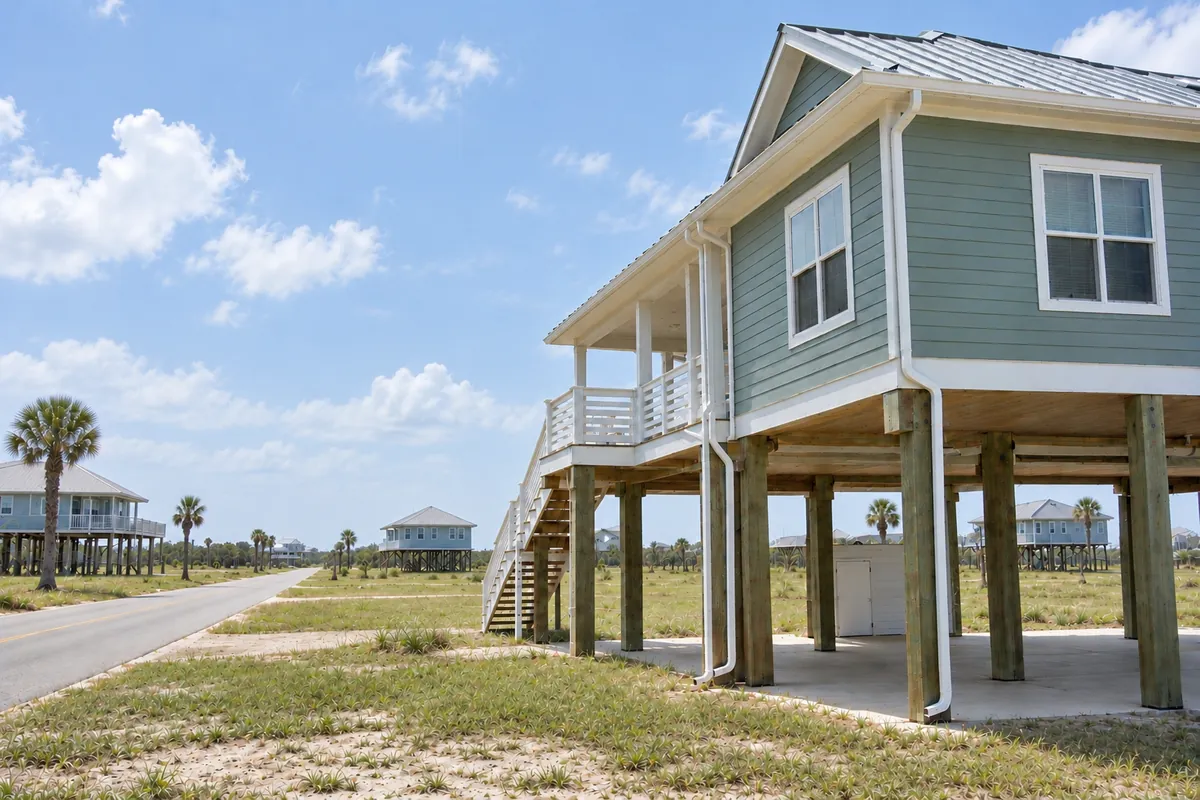
From FM 517 Ranches to I-45 Corridor Developments
Dickinson's property landscape tells the story of a community that grew organically over half a century, layering new construction on top of established neighborhoods without the cohesive planning that characterizes newer Galveston County cities. The result is a housing market with two distinctly different gutter profiles, each presenting its own set of challenges and opportunities for homeowners who take drainage seriously.
The older core of Dickinson runs along FM 517 and the residential streets that branch off toward the bayou. These neighborhoods were largely built during the 1960s and 1970s, when single-story ranch homes and modest two-bedroom cottages defined the area's residential character. Lot sizes are generous by modern standards, often a quarter-acre or more, and decades of growth have produced dense canopy coverage from live oaks, pecans, hackberry, and Chinese tallow trees. That mature vegetation creates a relentless debris load for any gutter system — live oak catkins blanket gutters in spring, pecan leaves and shells clog downspouts in fall, and Chinese tallow produces sticky seed pods that adhere to gutter walls and resist standard flushing. For homeowners in these established neighborhoods, gutter guards represent a practical investment that can reduce the cleaning frequency from quarterly visits to once or twice per year.
Newer Developments and the Upgrade Opportunity
East of I-45 and along the southern reaches of the city, newer subdivisions have reshaped Dickinson's residential footprint. These developments, many built within the last 10 to 15 years, feature two-story traditional and transitional-style homes on smaller lots with young landscaping that has not yet reached canopy maturity. The debris challenge is lighter in these neighborhoods, but the gutter challenge is structural. Builder-grade installations in these communities follow the same cost-minimization pattern seen across the Houston metro: 5-inch K-style aluminum, hangers at 36-inch spacing, and minimal downspout coverage that technically meets code but underperforms during the intense rainfall events that define the Galveston County wet season.
Waterfront and bayou-adjacent properties represent a third category within Dickinson's housing stock. Homes along Dickinson Bayou and its tributaries occupy some of the most desirable — and most flood-vulnerable — lots in the city. These properties face not only the standard roof-runoff challenge but also the risk of rising water from the bayou itself during sustained rain events. Oversized gutter systems with extended downspout runs that direct water toward the street rather than toward the bayou are essential on these properties, where every inch of separation between roof runoff and the foundation matters during high-water events.
Across all property types in Dickinson, the common thread is clay soil. The expansive Beaumont clay that underlies the entire community swells when wet and contracts when dry, creating a perpetual tug-of-war with slab foundations. Gutter systems that maintain consistent moisture levels around the foundation perimeter — by preventing concentrated runoff from saturating one side while the other dries — represent the single most effective strategy for minimizing the differential settlement that drives costly foundation repairs throughout the bayou corridor.
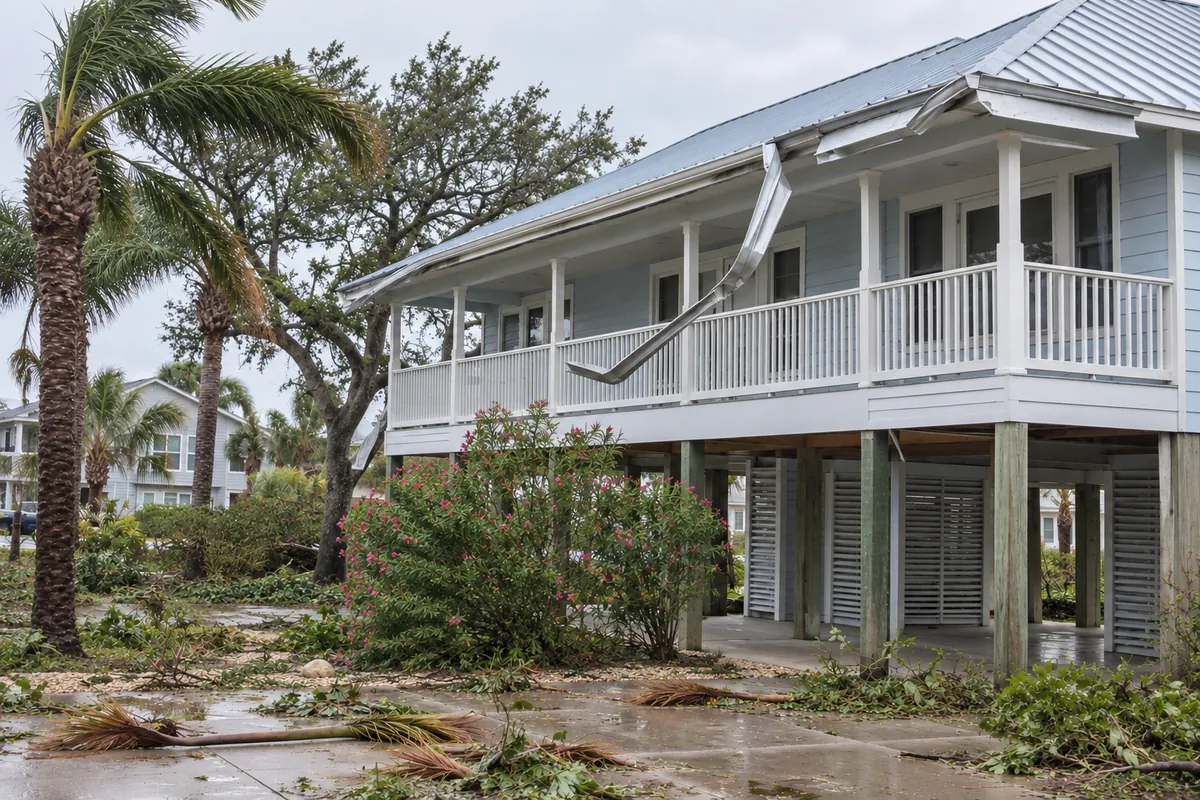
Gutter Services for Dickinson Homes
From aging systems on established FM 517 properties to builder-grade upgrades in newer I-45 corridor subdivisions, every service is tailored to Dickinson's bayou-country flood risk and demanding clay-soil conditions.
Gutter Installation
Seamless 5-inch and 6-inch aluminum systems custom-fabricated on-site for Dickinson homes. Oversized 6-inch profiles strongly recommended for bayou-adjacent properties where flood-prone conditions demand maximum roof-water management capacity.
Learn More →Gutter Repair
Seam resealing, hanger replacement, and slope correction for aging gutter systems on Dickinson's 1960s–70s ranch homes. Addressing leaks and sags before they compound bayou-corridor flooding with uncontrolled foundation-side runoff.
Learn More →Gutter Cleaning
Debris removal and downspout flushing for Dickinson properties surrounded by mature live oaks, pecans, and Chinese tallow trees. Recommended two to three times annually for older FM 517 lots with heavy canopy coverage.
Learn More →Gutter Guards
Micro-mesh and screen guard systems that block catkins, pecan shells, and tallow-tree debris while maintaining full water flow. Especially valuable for mature-canopy lots along the bayou where seasonal debris loads overwhelm unprotected gutters.
Learn More →Downspout Services
Downspout installation, rerouting, and underground drainage extensions designed to carry roof runoff at least four to six feet from Dickinson foundations. Critical for bayou-adjacent properties where saturated soils cannot absorb additional water during storms.
Learn More →Questions about your Dickinson gutters?
Free estimates available for all Dickinson neighborhoods — no obligation.
Dickinson's Climate and Why It Matters for Gutters
Dickinson receives approximately 50 inches of rainfall per year, with the heaviest concentration falling between May and October when subtropical moisture from the Gulf feeds intense convective thunderstorms capable of dropping two to three inches in under an hour. These high-intensity events are precisely the conditions that overwhelm undersized gutter systems, sending sheets of water cascading over gutter lips and directly onto foundation-adjacent soil that is already approaching saturation from the elevated bayou-corridor water table.
The legacy of Hurricane Harvey looms over every drainage conversation in Dickinson. The 2017 storm dropped more than 40 inches of rain on the area over four days, pushing Dickinson Bayou to record flood levels and demonstrating in devastating fashion what happens when water has nowhere to go. While no residential gutter system can prevent bayou flooding at that scale, properly designed and maintained gutters prevent the compounding effect of uncontrolled roof runoff adding to an already overwhelmed watershed. During lesser storms — the kind that arrive several times each hurricane season — the difference between a functioning gutter system and a failing one can determine whether foundation-side soil stays manageable or crosses the saturation threshold that triggers slab movement.
Subtropical humidity averaging 75 to 80 percent year-round creates a corrosion-friendly environment for older gutter systems, particularly sectional aluminum with exposed seam joints and galvanized steel that has lost its protective zinc coating. Dickinson sits far enough inland to avoid the worst direct salt-air corrosion that attacks Galveston Island hardware, but the city's proximity to Galveston Bay — roughly eight miles at the nearest point — means that salt-laden onshore breezes still contribute to moderate corrosion over time. Standard seamless aluminum performs well in Dickinson without marine-grade upgrades, though homes on the eastern edge of the city closest to the bay may benefit from more frequent inspection of hardware connections and fasteners.
Clay soil expansion and contraction completes the picture. The Beaumont clay underlying Dickinson swells dramatically when saturated and contracts sharply during drought, creating a cycle that places constant stress on slab foundations. A properly designed gutter system with adequate downspout extensions helps maintain consistent moisture levels around the foundation perimeter — the single most important factor in preventing the differential settlement that drives foundation repair calls across the bayou corridor. In Dickinson's flood-prone landscape, that consistency is both more difficult to achieve and more consequential when it fails.
Dickinson Quick Facts
- Annual Rainfall: ~50 inches (32% above national average)
- Peak Rain Season: May through October
- Soil Type: Beaumont clay — highly expansive
- Primary Flood Risk: Dickinson Bayou watershed
- Harvey Impact: Catastrophic — record bayou flooding
- Salt Exposure: Moderate (inland but bay-adjacent)
- Humidity: 75–80% average year-round
- Recommended System: 6-inch seamless aluminum with extended downspouts
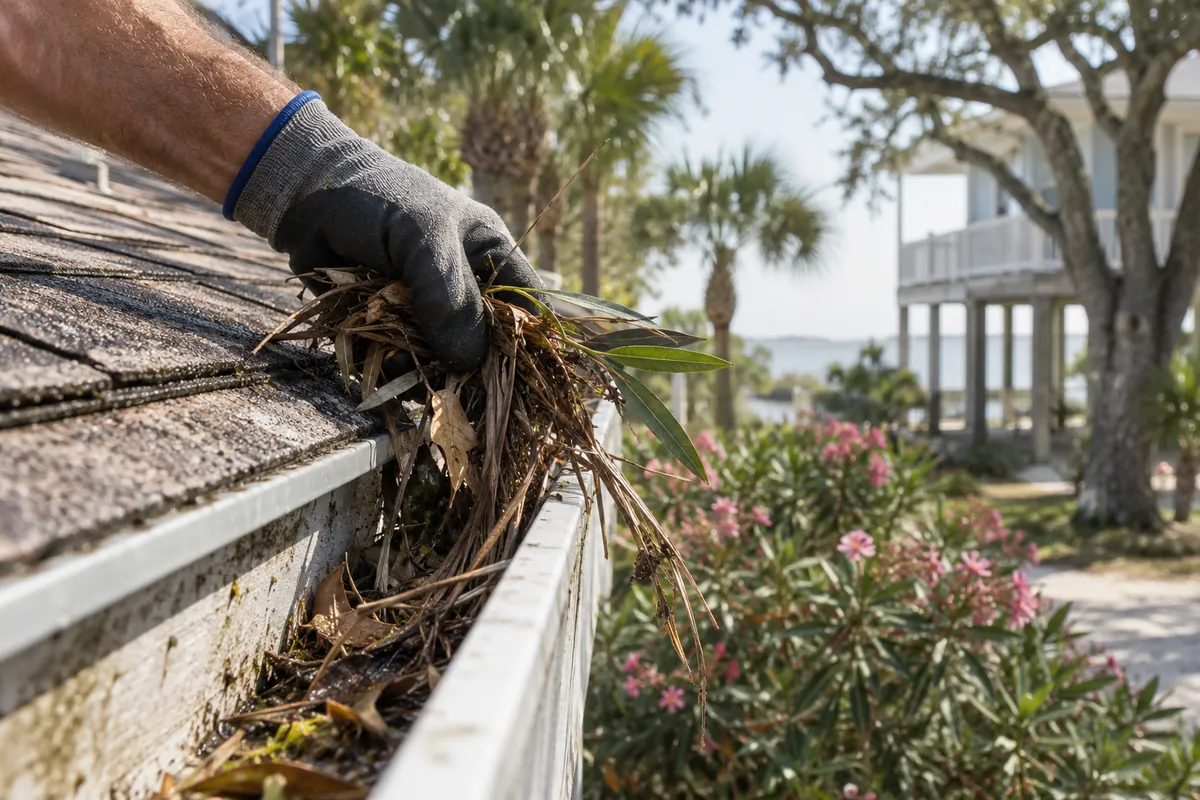
Communities Near Dickinson
Galveston Clean Gutters serves Dickinson and every surrounding community across Galveston County. Free estimates are available throughout the region.
League City
Galveston County's largest city with 115,000 residents, master-planned communities on clay soils, and high demand for builder-grade gutter upgrades.
Texas City
Industrial bayfront city with diverse housing stock from mid-century bungalows to newer subdivisions requiring full-service gutter solutions.
Friendswood
Established neighborhoods with mature tree canopy and Clear Creek flood exposure. Gutter cleaning and guard installation in high demand.
La Marque
Neighboring community along the I-45 corridor with a mix of older homes and revitalized development on Gulf Coast clay soils.
Santa Fe
Rural-suburban community west of I-45 with larger lot sizes and heavy tree coverage driving consistent gutter cleaning demand.
Bacliff & San Leon
Bayfront communities on Galveston Bay where salt exposure and wind-driven rain demand corrosion-resistant gutter systems and frequent maintenance.
Protect Your Dickinson Home from Bayou Flooding
Dickinson Bayou's flood history and 50 inches of annual rainfall make proper gutter drainage essential. Free estimates are available with no obligation for every Dickinson neighborhood.
(409) 741-9557