Mainland Crossroads
La Marque sits at one of Galveston County's most consequential intersections. With Interstate 45 running through its western edge and Highway 3 (the old Galveston Road) bisecting the city center, this community of roughly 18,000 residents has served as a mainland crossroads since the early twentieth century. Positioned between Texas City to the south and Dickinson to the north, La Marque occupies a transitional zone—close enough to the industrial corridor to feel its influence, far enough from the island to remain distinctly mainland in character, and connected enough to the Houston metro via I-45 to attract a steady stream of new residents drawn by some of the most affordable home prices in the greater Galveston County area.
That affordability has become one of La Marque's defining features in recent years. As home prices in League City and Friendswood have climbed well beyond entry-level reach, La Marque has emerged as a viable alternative for first-time homeowners, young families, and investors looking to purchase older properties at price points that still allow room in the budget for necessary renovations. The city's revitalization efforts—particularly along the old Highway 3 commercial strip and in the downtown core—have reinforced this trend, attracting small businesses, restaurants, and a renewed sense of civic investment that had been absent for much of the late twentieth century.
Highland Bayou and the Flooding Reality
No conversation about property maintenance in La Marque can avoid Highland Bayou. This slow-moving waterway winds through the heart of the city, draining a watershed that extends northwest into the Santa Fe area before emptying into the wetlands near Hitchcock. During heavy rainfall events, Highland Bayou rises quickly and spreads across its broad, shallow floodplain—a floodplain that includes significant portions of La Marque's older residential neighborhoods. The bayou flooded extensively during Hurricane Harvey in 2017, and lesser but still damaging flooding has occurred during multiple unnamed heavy-rain events since.
For homeowners in the Highland Bayou corridor, gutter performance is not an aesthetic concern—it is a structural one. When the bayou is running high and street drainage is already overwhelmed, the only thing standing between a foundation and water infiltration is the home's own roof-drainage system. Gutters that are clogged, undersized, or improperly pitched during these events do not merely overflow; they redirect thousands of gallons of roof runoff directly against foundation walls, into crawl spaces, and across low-lying yards that are already saturated from rising bayou water. The compounding effect—water coming from above via failed gutters and from below via bayou flooding—is what produces the most severe foundation and structural damage in La Marque homes.
Highland Bayou runs through the center of La Marque, and its floodplain covers a substantial portion of the city's older residential areas. During heavy rain events, homes face water pressure from two directions simultaneously—rising bayou levels from below and roof runoff from above. A properly sized, well-maintained gutter system is the only controllable variable in that equation.
A Housing Stock in Transition
Much of La Marque's residential construction dates to the 1950s through the 1970s, an era when the city's population was closely tied to the petrochemical workforce in Texas City. These homes—typically single-story frame or brick ranch houses on quarter-acre lots—were built with the materials and methods of their time. Many were constructed without gutter systems entirely, relying on wide roof overhangs and lot grading to move water away from foundations. Others received galvanized steel gutters that have long since corroded past any useful function. As these properties change hands to new owners drawn by La Marque's affordability, gutter installation or full-system replacement frequently appears near the top of the renovation priority list.
The city has also seen pockets of newer infill development, particularly along the FM 1764 corridor and near the La Marque ISD campus areas. These newer homes bring modern rooflines with valleys and dormers that require properly engineered gutter layouts, but they also benefit from builder-installed systems that—when correctly sized—provide a solid baseline. The challenge for new-construction homeowners in La Marque tends to center on whether the builder installed 5-inch gutters as a default when the roof's square footage and valley configuration actually demand 6-inch systems at key collection points.
Between the aging housing stock, the bayou flooding risk, and the affordability-driven influx of new homeowners, La Marque has become one of the most active markets for gutter services in Galveston County. The demand is practical rather than cosmetic: property owners here need drainage systems that work under pressure, not decorative trim that merely looks the part.
Property Landscape
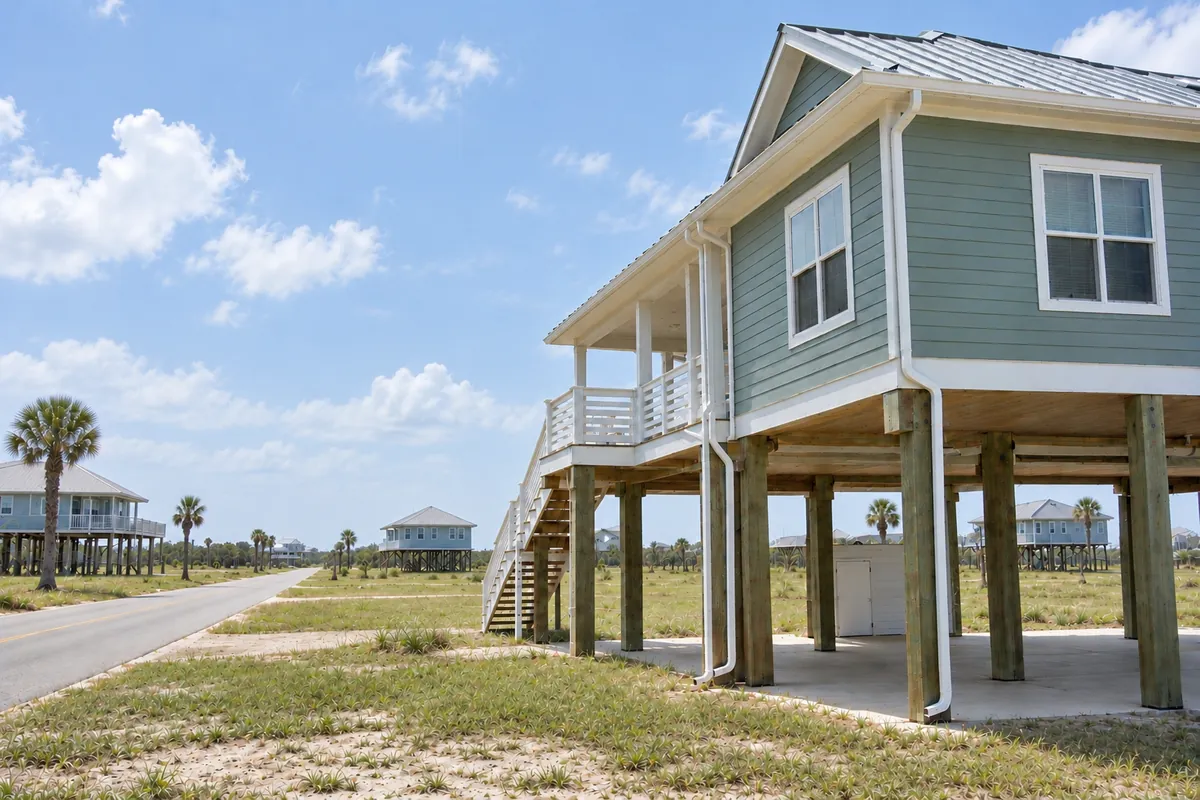
La Marque's residential geography tells the story of a mid-century Texas town that grew quickly during the post-war industrial boom, settled into decades of relative quiet, and is now experiencing a second wave of investment. Each layer of that history has left its mark on the housing stock, and each presents distinct challenges for gutter contractors and homeowners alike.
Post-War Core Neighborhoods
The oldest and most densely built sections of La Marque cluster around the downtown area between Highway 3 and the railroad tracks, extending south toward Highland Bayou. These neighborhoods feature the small-lot, modest-footprint homes that defined working-class Texas cities in the 1950s and 1960s: pier-and-beam foundations, clapboard or asbestos-shingle siding, simple gable rooflines, and mature live oaks that tower over single-story structures. Many of these homes sit on lots with minimal grade separation from the street, meaning that any roof runoff not captured by gutters flows directly toward the foundation and, in many cases, toward a neighbor's property as well.
For homes in this vintage, the most common gutter scenario is either a complete absence of any system or the remnants of original galvanized steel gutters that have corroded at every seam and bracket point. Full-system replacement with seamless aluminum is typically the most cost-effective approach. Attempting to patch sixty-year-old galvanized steel is an exercise in diminishing returns—fixing one corroded joint simply shifts stress to the next weakest point, and the repair cycle never ends.
Brick Ranch Belt
A second wave of construction during the 1960s and 1970s produced the brick ranch homes that line many of La Marque's residential streets north of FM 1764 and east toward the Dickinson border. These are larger homes than the downtown core stock—typically 1,200 to 1,800 square feet with hip rooflines, attached carports or garages, and shallow-pitch roof sections that are particularly challenging for gutter drainage. Hip roofs distribute water to all four sides of a structure, which means the entire perimeter needs gutter coverage rather than just the two eave sides of a simple gable. When these homes were built, many received sectional gutters with slip-joint connectors that have become the primary failure point over the decades—leaking at every joint and staining the brick below.
Replacing sectional systems with continuous seamless gutters eliminates those joint failures and dramatically reduces the maintenance burden. For brick ranch homes with hip roofs, a full-perimeter seamless system with strategically placed downspouts—typically one for every 20 to 25 linear feet of gutter run—provides the kind of comprehensive coverage these roof geometries demand.
Newer Infill and FM 1764 Development
The most recent additions to La Marque's housing stock appear primarily along the FM 1764 corridor and in scattered infill lots throughout the city where older structures have been demolished and replaced. These newer homes range from entry-level production builds to custom single-family residences, and they generally arrive with builder-installed gutter systems. The primary concern with these properties is not the absence of gutters but rather whether the installed system matches the actual drainage demands of the roof. Complex rooflines with multiple valleys funnel large volumes of water to concentrated collection points, and builder-standard 5-inch gutters can overflow at those points during the two-to-four-inch-per-hour downpours that define the Gulf Coast storm season from May through October.
Across every era of La Marque construction, the flat terrain and clay-heavy soil create a common thread: downspout discharge planning matters as much as the gutter system itself. Without proper extensions, splash blocks, or underground drain tie-ins, a perfectly functioning gutter merely relocates water from the roof edge to the foundation perimeter—trading one problem for another on lots where natural drainage is virtually nonexistent.
Gutter Services for La Marque Homes
Every service addresses the bayou flooding, aging housing stock, and flat-terrain drainage challenges that define La Marque properties.
Gutter Installation
Seamless aluminum systems sized for La Marque's mid-century rooflines and newer infill construction. Full-perimeter coverage for hip-roof brick ranches and first-time installations on older homes that never had gutters.
Learn More →Gutter Repair
Targeted fixes for corroded joints on aging sectional gutters, sagging runs caused by failed hangers, and storm-damaged sections. Hanger re-spacing to meet wind-load requirements for Highland Bayou corridor properties.
Learn More →Gutter Cleaning
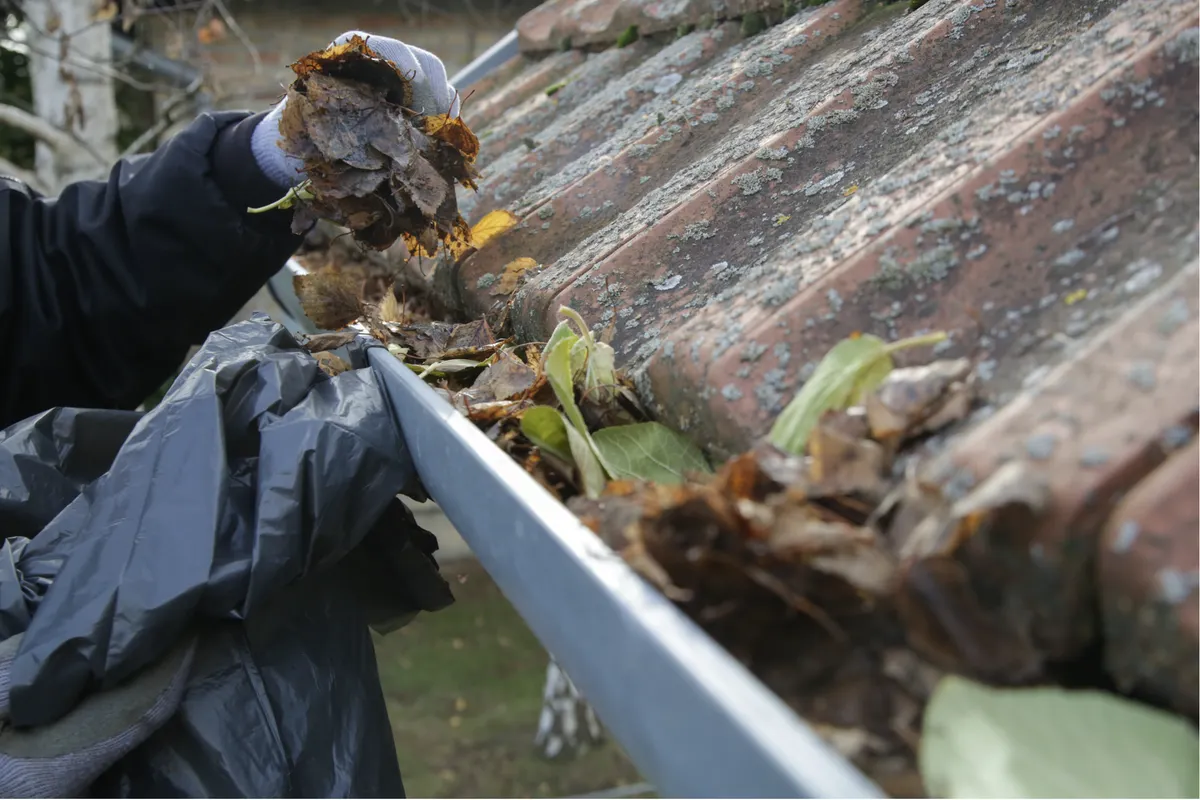
Seasonal cleaning schedules built around La Marque's heavy live oak canopy—spring catkin drops, fall leaf shed, and post-storm debris removal. Includes downspout flushing and a visual condition inspection at every visit.
Learn More →Gutter Guards
Micro-mesh guard systems that block live oak debris and pine needles while maintaining full flow capacity during intense Gulf Coast downpours. Critical for homes surrounded by La Marque's mature tree canopy.
Learn More →Downspout Services
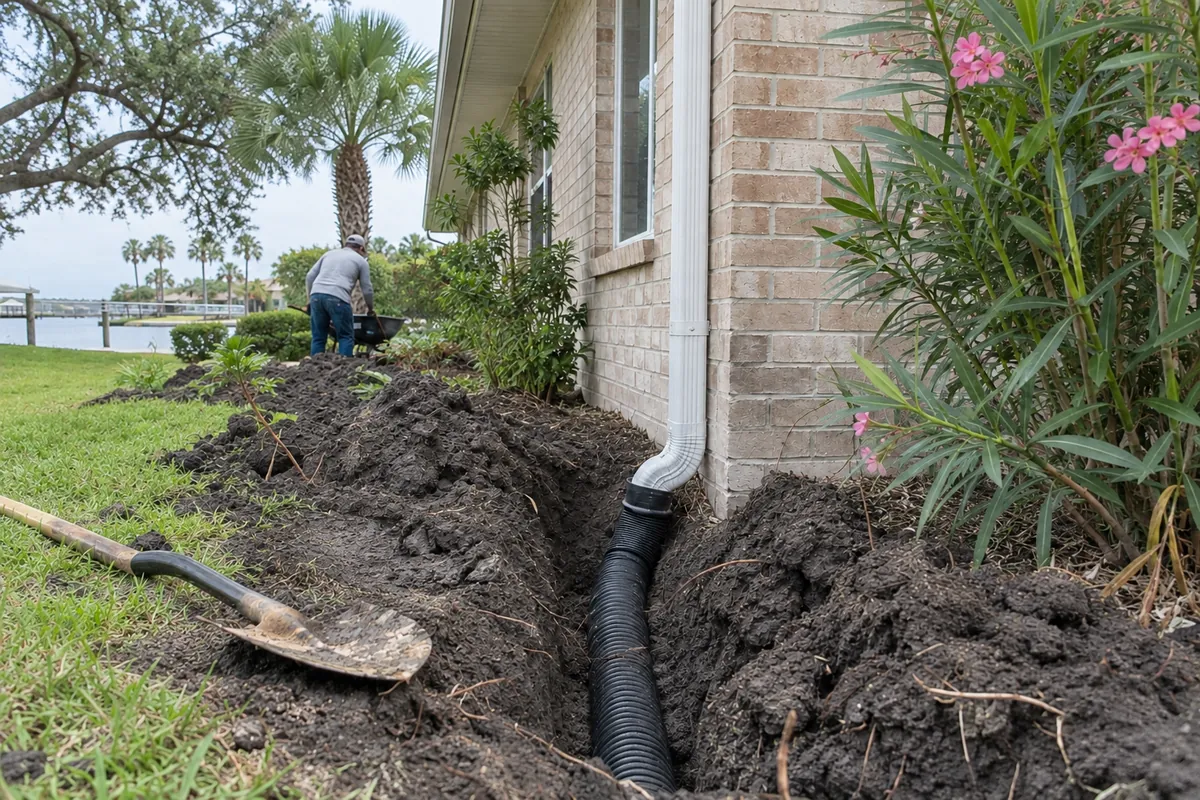
Essential for La Marque's flat terrain and clay soil. Extensions, underground drain tie-ins, and pop-up emitters engineered to move water well clear of foundations on low-grade lots near Highland Bayou.
Learn More →Ready to Protect Your La Marque Property?
Free estimates with transparent pricing—no pressure, no hidden fees.
Why La Marque Gutters Work Harder
Fifty inches of annual rainfall, Highland Bayou flooding, flat terrain with clay soil, and proximity to the industrial corridor create demanding conditions for every gutter system in the city.
La Marque receives approximately 50 inches of rainfall annually, with the heaviest concentrations arriving between May and October when Gulf Coast thunderstorms routinely produce two to four inches in a single afternoon. That raw volume is challenging enough on its own, but the city's essentially flat topography transforms routine heavy rain into a compounding drainage problem. Without meaningful natural grade to channel water away from structures, every inch of roof runoff must be captured by gutters and directed through downspouts to engineered discharge points. When gutters fail during these events—whether from clogs, undersizing, or structural damage—the water pools against foundations on lots where it has nowhere else to go.
Highland Bayou amplifies this challenge in ways that communities without a central waterway simply do not experience. When the bayou is running high after sustained rainfall, the surrounding water table rises with it. Street drains back up. Yard drainage slows to a crawl. In these conditions, roof runoff that would normally percolate into soil or flow toward street gutters instead sits on the surface, saturating the clay-heavy subsoil that underlies most of La Marque. That saturated clay expands, exerting lateral pressure against foundation walls—a process that accelerates significantly when improperly discharged gutter water adds thousands of additional gallons directly to the foundation perimeter during every storm event.
La Marque's position along the I-45 corridor also places it within range of the industrial emissions from the Texas City refinery complex to the south. While the exposure is less intense than in Texas City proper, prevailing winds can carry sulfur compounds and particulate matter north into La Marque's residential areas, contributing to accelerated surface corrosion on unprotected metal gutters over time. Homes on the southern edge of town, closer to the Texas City boundary, experience this effect most noticeably.
Hurricane preparedness is a non-negotiable consideration for any gutter installation in La Marque. The city sustained significant damage during Hurricane Ike in 2008 and widespread flooding during Hurricane Harvey in 2017. More recently, Hurricane Beryl in 2024 reinforced the reality that tropical weather events are not hypothetical scenarios in this part of the coast—they are recurring operational conditions. Hidden hangers spaced at 18 to 24 inches, secured into rafter tails rather than fascia alone, provide the structural anchoring needed to keep gutter systems attached through tropical-storm-force winds that La Marque experiences every few years.
La Marque Quick Facts
- Annual Rainfall: ~50 inches, concentrated May–October
- Primary Flood Risk: Highland Bayou corridor through city center
- Hurricane History: Ike (2008), Harvey flooding (2017), Beryl (2024)
- Terrain: Flat; minimal natural drainage grade
- Soil Type: Clay-heavy subgrade; slow percolation, expansion risk
- Industrial Proximity: Texas City refinery corridor 3–5 miles south
- Peak Storm Season: June through November
- Tree Canopy: Mature live oaks; heavy seasonal debris load
Nearby Communities Also Served
Galveston Clean Gutters serves La Marque and neighboring communities throughout Galveston County.
Protect Your La Marque Home from Water Damage
Highland Bayou flooding, fifty inches of rain, and flat terrain demand gutter systems built for the real conditions of this community. Connect with a qualified contractor today.
(409) 741-9557